Multani Khussa: A Complete Guide
Multani khussa is an exquisite handmade footwear from Pakistan. This shoe made of leather has a history of many years and has retained its colors and craftsmanship for many centuries. Multan is the city where the best khussa are made by skilled artisans. Celebrations and weddings always require khussa shoes.
This guide offers a general overview, details and traditions vary between makers and areas.
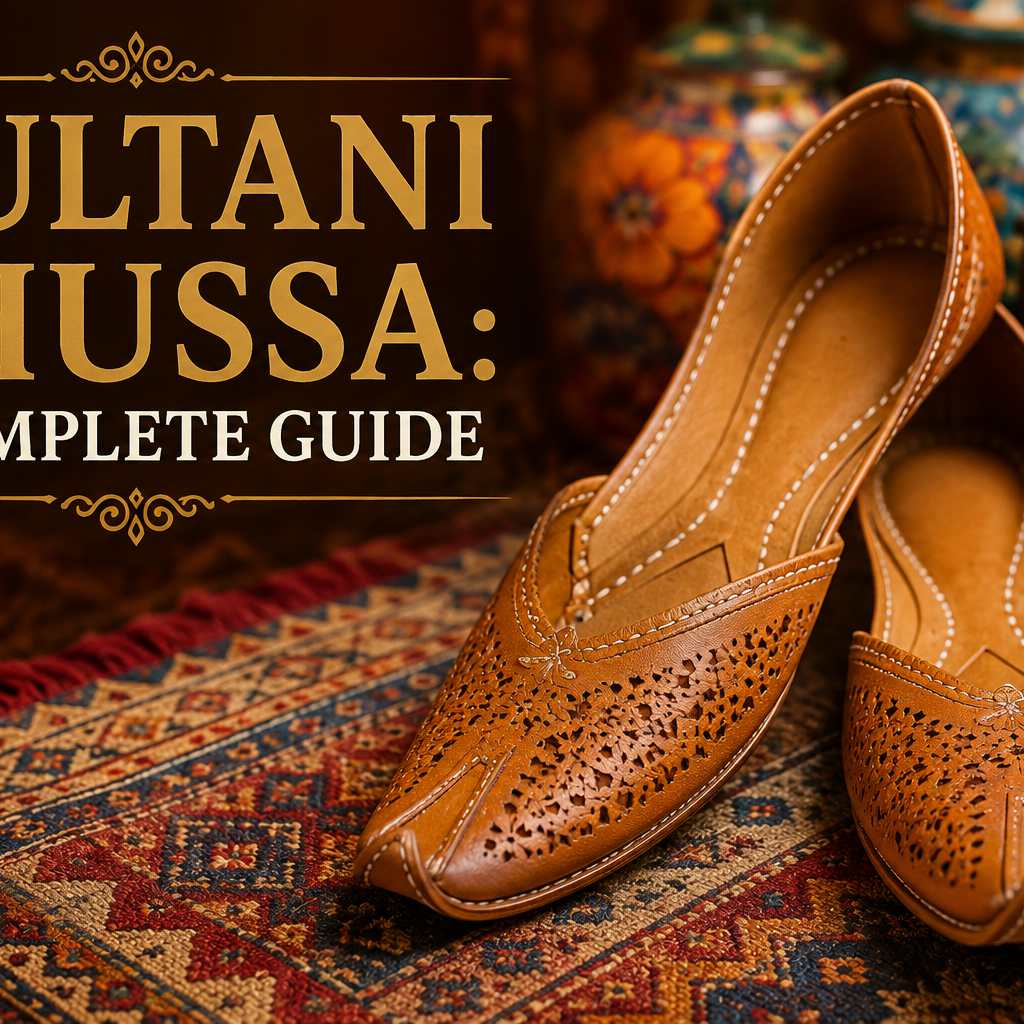
Quick answer: The Multani Khussa is a native style of shoe made in the city of Multan of south Punjab. It is made up of vegetable tanned leather, embroidered and decorated with beads and mirrors. Its origin goes back to the shoes of the Mughal era. This shoe requires days to make as each is cut and stitched with care by skilled workers. The Khussa becomes a favorite when worn with shalwar kameez during weddings and festivals.
Roots of the khussa
Multani khussa is an old and royal craft. Its story reaches back to the Mughal court. Emperors and nobles once wore fine leather shoes. These shoes marked wealth and high rank.
A royal name marks the early style. Court shoes were known as Saleem Shahi. This name honoured a royal title of Jahangir. Gold thread and gems adorned the finest pairs.
A royal craft spread from court to country. Ordinary people took up the shoes over time. A new name, khussa, came into common use. So a royal fashion became a folk treasure.
Multan grew into a great centre. Its leatherworkers won lasting fame. Sindh, Bahawalpur and Lahore made khussa too. Yet Multan remained the heart of the craft.
Materials used in Multani Khussa
Leather forms the heart of the khussa. Artisans favour vegetable tanned hides. This natural tanning keeps the leather strong. It also avoids harsh chemical hardening.
Different leathers suit different parts. Buffalo leather forms the sturdy sole. Softer cowhide shapes the upper. One piece of leather often makes the top.
A single unit gives it its distinctive look. It comes up to give a pointy toe. A curve is used to distinguish the khussa shoe. It has a unique style.
Threads made from cotton are used to sew the shoe. The artisans sew the upper parts to the sole using threads that have good grip on the leather.
Making of Multani Khussa
The process of making khussa is a long process and the artisans learn to become proficient in each process step by step over many years. The skills are passed down from one generation to another.
The process starts with the leather. Skilled artisans select the skins for processing. The pieces are then measured carefully and prepared. The next step is to dye the leather.
Stitching demands a practised hand. Craftsmen sew each pair by hand. Curved needles keep the leather supple. This handwork gives the shoe its life.
Embroidery crowns the finished shoe. Artisans work bright thread across the upper. Beads, mirrors and shells adorn the leather. One fine pair can take days to complete.
Styles and designs of Multani Khussa
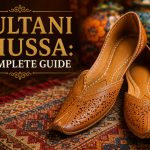
Multani khussa is known for bold designs. Rich embroidery covers the upper. Bright threads trace floral and geometric patterns. This bold style marks the Multani hand.
Embellishments add sparkle and charm. Tiny mirrors catch the light. Beads and cowry shells dot the leather. Small bells jingle on some festive pairs.
Colours run from earthy to bright. Natural tan and brown show the leather. Velvet pairs glow in rich jewel tones. Gold and silver thread lends a royal air.
Styles suit both men and women. Sturdy khussa pairs with a kurta for men. Ornate pairs match a bride at her wedding. Every taste finds its own design.
Comfort grows with the wearing. A new khussa may feel firm at first. Soft leather moulds to the foot in time. Many pairs have no left or right at the start.
Care keeps a khussa in good health. A dry cloth clears the dust away. Leather cream feeds the hide and thread. Dry storage guards it from damp and mould.
Wearing and the revival
Khussa pairs with traditional dress. It suits the shalwar kameez and kurta. Women wear it with bright festive clothes. It completes many a classic outfit.
Festivals bring the khussa out in force. Eid shoppers seek fresh pairs each year. Weddings call for the finest embroidery. This shoe marks days of joy and colour.
This craft has seen a fresh revival. Younger buyers have taken to the khussa. New designs blend heritage with modern taste. Sleeker pairs suit western outfits too.
Its fame now reaches far abroad. Buyers overseas seek the handmade shoe. This demand supports the artisans of Multan. Sustainable fashion has renewed its appeal.
Frequently asked questions
What is a Multani khussa? A Multani khussa is a traditional handmade leather shoe from the city of Multan in southern Punjab. It belongs to a wider family of South Asian footwear also known as khussa, mojari or jutti. Crafted mostly from vegetable tanned leather, it is shaped from a single piece that curves up into a distinctive pointed and slightly curled toe. Its upper is richly decorated with embroidery, beads, mirrors and other embellishments all worked by hand. Comfortable, durable and elegant the khussa is worn with traditional dress and remains a proud symbol of Multani craft.
What is the history of the khussa? Khussa is a shoe that has origins from royalty and has come down from the times when the rulers of the Mughal empire used to wear leather shoes embellished with gold threads and precious stones. Such shoes worn by the royalty were called Saleem Shahi because they had been named according to the name of one of the kings of that era, namely Emperor Jahangir. The shoes later became popular among common folk and came to be called Khussa.
How is a Multani khussa made? Making a Multani khussa is a slow, handcrafted process that can take several days for a single pair. Artisans begins by selecting and preparing vegetable tanned leather and then cut to measure and dyed in rich colours. Buffalo leather is often used for the sturdy sole, with softer cowhide for the upper. This upper is frequently made from a single piece. These pieces are stitched together by hand, traditionally with cotton thread and curved needles. Embroidery, beads, mirrors and other embellishments then finish the shoe.
When do people wear khussa? People wear khussa with traditional dress, pairing it with the shalwar kameez, kurta pajama, festive outfits and bridal wear. It is especially popular at weddings at Eid and during other festivals and celebrations, when fine embroidered pairs are in high demand. Both men and women wear khussa, with sturdier, plainer styles favoured by men and more ornate, colourful pairs often chosen by women. In recent years the khussa has also been paired with western outfits as younger wearers embrace it as both heritage and fashion.
Where can you buy Multani khussa? A best place to buy Multani khussa is Multan itself. Bazaars and workshops in Multan offer a wide range of styles of Khussa from plain everyday pairs to richly embroidered festive designs. Skilled artisans in the city, once working as local cobblers and now often in small workshops, craft the shoes by hand. Craft shops and markets in other cities sell khussa too, now increasingly online. Demand grows both within Pakistan and overseas. Buying handmade pairs directly supports the artisans and helps keep a centuries old craft tradition alive.
Royal shoe of Multan
Multani khussa is the royal shoe of the city of saints. This handmade leather craft began in the courts of emperors. Skilled hands cut, stitch and embroider each pair. Bright thread, beads and mirrors adorn the leather. Weddings and festivals bring out its finest colours. Few shoes carry such heritage on the foot.
You may come to the khussa for the craft the colour or the comfort. This shoe rewards the wearer either way. You can watch the artisans stitch the curved leather. You can choose a pair bright with festive embroidery. You can wear a piece of Multani heritage yourself. Come to Multan and find the royal shoe. This is the khussa of Multan.