Peoples of Azad Kashmir: A Complete Guide
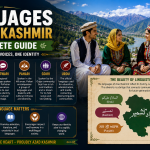
A varied population gives Azad Kashmir a rich human treasure. Many tribes and communities share these green hills and valleys. Sudhans, Gujjars, Rajputs and Kashmiris live across the land. Pahari, Gojri and Kashmiri fill the streets and villages. Warm hospitality and a strong shared identity bind them together. This guide covers the peoples of Azad Kashmir for the curious traveller. It explains the peoples the Sudhans the Gujjars, other tribes the culture and the diaspora.
This guide offers a general overview. Details and figures vary between sources.
Quick answer: Azad Kashmir is home to many peoples and tribes, giving it a rich cultural character. Largest are the Sudhans of the Poonch and Sudhanoti areas the pastoral Gujjars and nomadic Bakarwals, plus various Rajput and Jat clans across the southern districts. Ethnic Kashmiris live mainly in Muzaffarabad, Neelum and Hattian, while groups such as Mughals and Tarkhans add to the mix. Most people speak Pahari along with Gojri, Kashmiri and Urdu. United by Islam, warm hospitality and a strong Kashmiri identity the peoples of the area also have deep ties abroad, especially in Britain.
A land of many peoples
A land of many peoples azad Kashmir brims with culture. Tribes share the green hills. Many tongues fill the air. So variety marks the land.
A rich mix marks the area. Many tribes live here. Each keeps its own ways. So culture runs deep.
A shared faith marks the people. Islam unites the tribes. Custom shapes daily life. So belief binds them all.
A warm welcome marks the culture. Hospitality greets the guest. Old ways honour the visitor. So kindness defines the people.
Sudhans of Poonch
Sudhans of Poonch form one of the largest tribes. They fill the southern hills. Their name marks a district. So the tribe shapes the land.
A founding tribe marks the Sudhans. They settled Sudhanoti long ago. Their name marks the district. So heritage runs deep here.
A wide home marks the tribe. Poonch and Sudhanoti hold most. Bagh and Kotli hold more. So the Sudhans spread wide.
An old tradition marks their roots. Oral tales tell of Pashtun descent. Pahari speech fills their villages. So heritage colours the tribe.
Gujjars and Bakarwals
Gujjars and Bakarwals bring a pastoral way of life. They tend flocks and fields. Herds climb the summer meadows. So the land feeds their animals.
A farming people marks the Gujjars. They work the fields and hills. Gojri speech fills their homes. So the tribe keeps its tongue.
A nomad group marks the Bakarwals. They roam with their flocks. Summer draws them to the meadows. So the seasons shape their life.
A herding life marks them both. Sheep and goats graze the grass. Families move with the herds. So old ways endure strong.
Rajputs, Jats and others
Rajputs, Jats and others fill out the tribes of the land. Many clans share the hills. Each holds its own home. So the mix grows rich.
A warrior line marks the Rajputs. Many clans spread through the south. Kotli and Bhimber hold many. So the Rajputs range wide.
A farming clan marks the Jats. They settle Mirpur and Bhimber. Old families work the land. So the Jats till the fields.
A craft tribe marks the Tarkhans. Many work as skilled carpenters. Mughal roots shape their line. So the trade defines them.
Kashmiris and other groups
Kashmiri people, along with others, contribute to the human capital. The Kashmiri people dwell in the north. Some smaller tribes are scattered around the territory. That is why the composition is diverse.
The Kashmiri people have a northern tribe. They live in the proximity of Muzaffarabad. However, the higher numbers are in Neelum and Hattian. That is why their language has managed to survive in several places.
The language distinguishes the Kashmiri people. They have a unique language which is typical for them. The language has developed in the north valley. That is how the culture has been preserved in the region.
The Turks have a scattered tribe. The Karlugh families came a long time ago and settled down in the villages of Muzaffarabad.
A shared culture and diaspora
Culture and diaspora are the key components that connect the people. Religion and tradition connect them. Many families migrated to other countries. Thus, connections spread all around.
A common feature is characteristic of the people. A strong Kashmiri identity connects them. The language varies, but the sense of pride remains. Thus, the unity covers all the tribes.
Diaspora characterizes the area. Many families moved to Britain. Mirpur supplies the largest amount of diaspora. Thus, foreign connections have a long history.
A living culture characterizes the region. Folklore, cuisine, and music exist. Traditions affect every household. Thus, the heritage is alive.
Frequently asked questions
Who are the main peoples of Azad Kashmir? Azad Kashmir is home to a rich variety of peoples and tribes. Largest is the Sudhan tribe, concentrated in the Poonch and Sudhanoti districts, with communities also in Bagh and Kotli. A pastoral people the Gujjars along with the nomadic Bakarwals are found across the hills, herding flocks in the meadows. Various Rajput and Jat clans live throughout the southern districts such as Mirpur, Bhimber and Kotli. Ethnic Kashmiris live mainly in the north around Muzaffarabad, Neelum and Hattian, while smaller groups such as Mughals, Tarkhans and Karlugh Turks add further variety.
Who are the Sudhans? A leading tribe the Sudhans rank among the largest in Azad Kashmir, concentrated in the Poonch and Sudhanoti districts. A whole district, Sudhanoti, takes its name from them. According to their oral traditions the Sudhans trace their origins to Pashtun ancestry. They are regarded as the founding tribe of the Sudhanoti area. Today they number in the hundreds of thousands, speaking the Pahari language, known for their strong sense of identity and hospitality. Their heartland is located around Palandri and Rawalakot, though communities are also found in Bagh and Kotli.
Who are the Gujjars and Bakarwals? A widespread people the Gujjars are a pastoral and farming community found across Azad Kashmir and much of South Asia, traditionally speaking the Gojri language. In the hills of Azad Kashmir they tend flocks and cultivate the land, forming an important part of rural life. A nomadic sub group the Bakarwals are famous for their seasonal migrations. They move with their herds of sheep and goats up to the high summer pastures and back down in winter. Both communities are closely tied to the land the meadows and the herding way of life that has endured for generations.
What languages do the peoples of Azad Kashmir speak? A mix of tongues marks the peoples of Azad Kashmir, reflecting their varied origins. Most widely spoken is Pahari, sometimes called Pahari Pothwari a common tongue across much of the area. A pastoral people the Gujjars speak Gojri, while ethnic Kashmiris in the north around Muzaffarabad, Neelum and Hattian, speak the Kashmiri language, though its use has been declining. Hindko is spoken in some areas, while Urdu serves as the official and shared language for education and administration. This mix of tongues is a key part of the cultural richness of the area.
Do the peoples of Azad Kashmir have ties abroad? Yes the peoples of Azad Kashmir have exceptionally strong ties abroad, especially with the United Kingdom. From the mid twentieth century onward, large numbers of families, particularly from the Mirpur area, settled in Britain, earning Mirpur the nickname Little England. These overseas communities keep close links with their home villages, returning to visit and investing in homes, businesses and public works. A powerful force the diaspora has shaped the culture and economy of the area, blending local traditions with influences from abroad. Today, ties to Britain and other countries remain a defining feature of life in Azad Kashmir.
Rich human treasure of Kashmir
A varied population forms the rich human treasure of Azad Kashmir. Many tribes and communities share these green hills and valleys. Sudhans, Gujjars, Rajputs and Kashmiris live across the country. Pahari, Gojri and Kashmiri fill the streets and villages. Warm hospitality and a strong shared identity bind them together. Few lands hold so varied and welcoming a people as this one.
You may come for the culture the tribes or the languages. This human treasure rewards the curious traveller. You can meet the Sudhans in the hills of Poonch and Sudhanoti. You can see Gujjar herders climb to the summer meadows. You can hear Pahari, Gojri and Kashmiri across the valleys. Come to know the peoples of Azad Kashmir and their warm welcome. This is the rich human treasure of Kashmir.