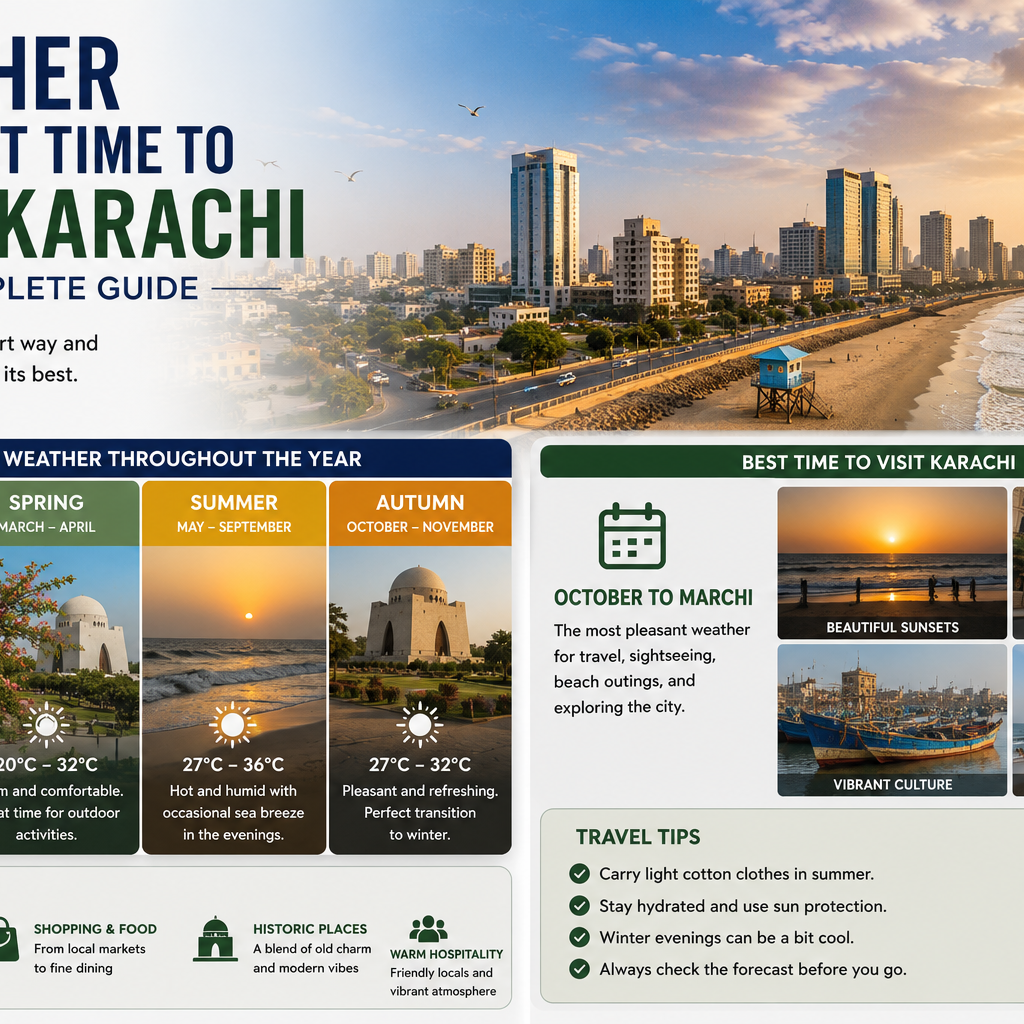
Weather and Best Time to Visit Karachi: A Complete Guide
Karachi is a warm coastal city for most of the year, so knowing its weather is the key to planning a good visit. Set on the shore of the Arabian Sea, the city enjoys mild, pleasant winters and long, hot, humid summers, tempered by a cooling sea breeze. The weather of Karachi shapes the best time to visit, the clothes to pack and the outings to plan. It is a city best explored in the cooler months, when the heat eases and the festivals begin. For anyone planning a trip to Karachi, this guide explains the climate, the seasons and the best time to go.
This guide covers the weather and climate of Karachi, its seasons and the best time to visit.
Quick answer: The weather pattern of Karachi is warm and coastal which is characterized by mild winters and hot summers that are humid. This pattern is moderated by the breezy condition caused by the Arabian Sea. The best time to travel there would be during the winter period, from November to February. It is a warm weather period with temperature ranging between 10°C and 27°C. The summer season is extremely hot while monsoon from July to September is humid and rainy.
Climate of the Karachi
Karachi has a warm, coastal climate. The city lies on the shore of the Arabian Sea, giving it a warm to hot climate for most of the year, with high humidity balanced by a cooling sea breeze. This coastal setting shapes the weather all year round.
Karachi is a dry city for most of the year. The city receives little rainfall over the year, most of it during the short monsoon season, so clear, sunny days are the norm. This dry climate makes for reliable weather for much of the year.
Karachi has two main seasons. The city has a long, hot summer and a short, mild winter, with only brief spells of spring and autumn in between. This pattern of a long summer and a short winter is central to the climate of the city.
Seasons of Karachi
The summer is long and hot. From around April to June the weather is at its hottest, often climbing above 40°C, with heatwaves a risk at the peak, before the monsoon brings some relief. This heat makes the height of summer the least comfortable time to visit.
The monsoon brings humidity and rain. From around July to September the city receives most of its yearly rain, with high humidity and, at times, heavy downpours that can cause flooding in low-lying areas. This monsoon season is humid and unpredictable. It is best approached with an eye on the forecast.
The winter is mild and pleasant. From around November to February the weather turns mild and dry, with comfortable days and cooler nights, the finest weather of the year. This gentle winter is the reason the cooler months are the peak season.
Best time to visit Karachi
The winter is the best time to visit the city. The mild, dry weather from around November to February is the most comfortable for sightseeing, with pleasant days and cool evenings. This makes the winter the peak season for visitors.
The winter brings the festivals and the beaches. The cooler months bring the great festivals of the city, from the literature festivals to the food festivals, along with the finest weather for the beaches and the parks. This blend of good weather and events is a large part of the appeal of winter.
The shoulder months are pleasant too. The months of October and March, on the edges of the winter, offer warm but pleasant weather with fewer crowds, a good choice for those who prefer a quieter visit. These shoulder months are a fine alternative to the peak season.
Season by season through the year
The cool season runs from November to February. These months bring the mildest weather, with daytime temperatures around 25°C and cooler nights, sometimes dropping below 10°C during a cold spell. This is the ideal time for sightseeing and outdoor outings.
The hot season runs from March to June. These months grow steadily hotter and more humid, with May and June the hottest, often above 40°C at the peak. This is the time to plan indoor visits and to avoid the midday sun.
The monsoon runs from July to September. These months bring the yearly rains, high humidity and, at times, flooding, though they also bring green to the parks and gardens. This is the wettest and most humid time of year. It calls for an eye on the weather.
What to pack and travel tips
Pack light clothes for most of the year. For the warm and hot months, light, breathable cotton clothing is best, along with sun protection, a hat and plenty of water. This keeps a visitor comfortable in the heat. Modest dress is respectful, especially at religious sites.
Bring a light layer for winter evenings. The winter days are mild, though the evenings and the occasional cold spell can be cool, so a light jacket or shawl is useful. This small addition covers the cooler nights. The days remain comfortable for light clothing.
Plan around the heat and the rain. In summer it is wise to plan outdoor visits for the early morning or the evening and to stay hydrated, while in the monsoon it is best to keep an eye on the forecast and avoid low-lying areas after heavy rain. This planning makes for a smoother trip. It helps a visitor make the most of the weather.
Frequently asked questions
What is the weather like in Karachi? Karachi has a warm, coastal climate with mild winters and long, hot, humid summers, tempered by a sea breeze from the Arabian Sea. It is a dry city for most of the year, receiving little rain outside the short monsoon season. It has two main seasons, a long hot summer and a short mild winter, with only brief spells of spring and autumn in between.
When is the best time to visit Karachi? The best time to visit Karachi is the winter, from around November to February, when the weather is mild, dry and pleasant, with temperatures roughly between 10°C and 27°C. This is the most comfortable time for sightseeing, the beaches and the parks. It also brings the great festivals of the city. The shoulder months of October and March are also pleasant, with fewer crowds.
How hot does Karachi get in summer? Karachi is very hot in the summer, especially from around April to June, when temperatures often climb above 40°C and can reach the mid-40s at the peak, with heatwaves a risk. The humidity is high due to the coastal setting, though the sea breeze offers some relief. The height of summer is the least comfortable time to visit the city.
When is the monsoon season in Karachi? The monsoon season in Karachi runs from around July to September, bringing most of the yearly rainfall, high humidity and, at times, heavy downpours that can cause flooding in low-lying areas. The temperatures during the monsoon are a little lower than the peak of summer. It is wise to keep an eye on the weather forecast when visiting during these months.
Does it get cold in Karachi? Karachi has a mild winter rather than a cold one, with pleasant days around 25°C from November to February. The nights are cooler. Occasional cold spells brought by dry northern winds can drop night temperatures below 10°C, with rare records lower still. A light jacket or shawl is useful for the winter evenings, though the days remain comfortable.
Is Karachi humid? Yes, Karachi is a humid city for much of the year due to its coastal setting on the Arabian Sea, with humidity highest from around March to November. The sea breeze helps to temper the heat and the humidity, especially near the coast. The winter months, from around December to February, are the driest and most comfortable, with lower humidity.
Choosing when to visit
Karachi is a warm coastal city with mild winters and long, hot summers, its weather the key to planning a good visit. Set on the shore of the Arabian Sea and cooled by a sea breeze, the city enjoys its finest weather in the winter, from around November to February, when the days are mild and the festivals begin. Its long hot summer and its humid monsoon are best approached with care, while its gentle winter is a joy for sightseeing, the beaches and the parks.
The best way to plan a trip to Karachi is to aim for the cooler months. Visit between November and February for the mildest weather, the finest beach days and the great festivals of the city. You could also choose the shoulder months of October and March for warmth with fewer crowds. Pack light clothes for the heat, a light layer for the winter evenings and sun protection all year round. Whether you come to Karachi for its landmarks, its beaches, its food or its festivals, the winter offers the most comfortable and rewarding time to enjoy all that the city has to offer.