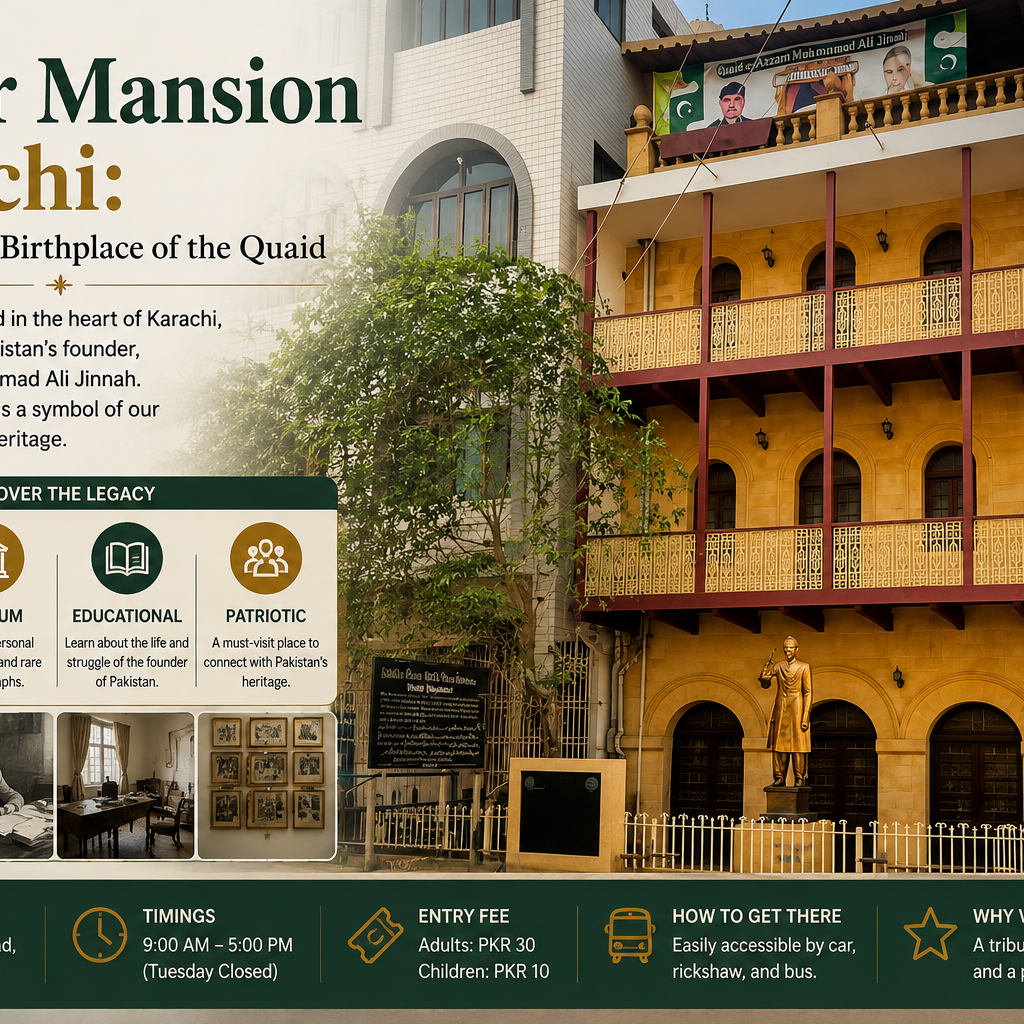
Wazir Mansion Karachi: Birthplace of Quaid-e-Azam
Wazir Mansion is one of the most historically significant buildings of Karachi. It is located in the old Kharadar area, in the southern part of the city. Wazir Mansion is officially recognised as the birthplace of Muhammad Ali Jinnah the founder of the country. It serves today as the Quaid e Azam Birthplace Museum. It is a colonial era stone house where the young Jinnah is said to have spent his early childhood. For anyone getting to know Karachi, Wazir Mansion offers a window into the early life of the founder and the history of the country in one modest, cherished monument.
This guide explains what Wazir Mansion is its history the museum and how to visit.
Wazir Mansion
Wazir Mansion is a historic former family home located in the Kharadar area of the old, southern part of Karachi. It is officially known as the Quaid e Azam Birthplace Museum, recognised by the state as the birthplace of Muhammad Ali Jinnah the founder of the country. It is a multi storey stone building in one of the oldest and busiest parts of the city. It is regarded as a precious national monument.
Wazir Mansion is tied to the early life of the Quaid. Muhammad Ali Jinnah was born on 25 December 1876. He is said to have spent around sixteen years of his childhood and youth in this house. His father Jinnahbhai Poonja was a merchant who had settled in Karachi and rented the family home. This connection to the formative years of the founder gives the building its deep significance.
Wazir Mansion serves today as a museum and national archive. It preserves belongings, photographs and documents related to the life of the Quaid, along with a public reading room and library. It attracts historians, students and visitors interested in the story of the founder and the movement for the country. This aspect of a museum makes the house a place of learning and reverence.
Quick answer: Wazir Mansion is a historic house located in the Kharadar area of old Karachi, officially recognised as the birthplace of Muhammad Ali Jinnah who founded the country and was born on 25 December 1876. It serves today as the Quaid e Azam Birthplace Museum, preserving belongings, photographs and documents related to the early life of the Quaid.
History of Wazir Mansion
The history of Wazir Mansion reaches back to the colonial era. The building was constructed in stone with lime and jute mortar, suited to the climate of the city, in the middle of the nineteenth century. The father of the Quaid Jinnahbhai Poonja had come from the ancestral village of Paneli in Gujarat and settled in Karachi for business, renting the family home in the busy Kharadar area. This origin as a merchant family home shaped the modest character of the house.
Wazir Mansion is closely tied to the birth of the Quaid. Muhammad Ali Jinnah was born here on 25 December 1876. The family lived in the house during his early years before moving on. It takes its name from a later owner named Wazir Ali. The clarification of the birthplace came in part from the book My Brother, written in the 1960s by Fatima Jinnah the sister of the Quaid.
Wazir Mansion became a national monument after independence. The Government acquired the historic building in 1953 and protected it under the law for ancient monuments, handing it to the Department of Archaeology and Museums for its care. It was formally inaugurated as the birthplace museum on 14 August 1953. Later conservation and restoration work strengthened and preserved the structure. This care has kept the house in good condition as a national treasure.
Note on the birthplace
Wazir Mansion carries some historical debate about the exact birthplace. The house is officially recognised by the state as the birthplace of the Quaid, a position maintained by national institutions and supported by family accounts, including those of Fatima Jinnah. This official status is the basis for the museum and the national reverence for the site.
Some historians have raised questions about the precise spot. A number of researchers have argued that the exact birthplace may have been a house on or beside the same plot, noting that records suggest the present building took its final form a few years after the birth. The date and even the year of birth have also been the subject of scholarly discussion. These debates are part of the historical record, though they do not diminish the significance of the site.
Wazir Mansion remains a cherished national monument regardless of the debate. Whatever the precise details the house is tied to the early life of the founder and the family. It remains an official and widely accepted place of remembrance. Its value as a museum and a symbol of the story of the country endures. This enduring significance is what draws visitors to the house.
Museum today
Wazir Mansion serves today as the Quaid e Azam Birthplace Museum, spread over the floors of the building. The ground floor holds a public reading room and archive the first floor displays the belongings and furniture used by the family, while the upper level holds documents and a library. This arrangement lets visitors move through the story of the early life of the Quaid.
Wazir Mansion preserves a range of personal belongings and artefacts. The rooms display items associated with the Quaid, from furniture and a bed to photographs, along with an oil painting of the founder and a map of the country inscribed on marble. The walls carry a rare collection of photographs of Muhammad Ali Jinnah. These artefacts offer a close, personal sense of the early life of the founder.
Wazir Mansion is also a place of study. The reading room and library hold a collection of books, along with newspapers and historical literature on the life of the Quaid the freedom movement, politics, law and the history of the country. Some law books once belonged to the Quaid himself. This makes the house a resource for students and historians as well as a museum.
Visiting Wazir Mansion
Wazir Mansion is one of the most meaningful heritage sites to visit in Karachi, offering a close look at the early life of the founder of the country. It is generally open to the public six days a week, closed on Wednesdays, through the day, though it is worth checking the current timings before a visit. There is usually a modest or no entry fee. The house draws students, historians and those interested in the story of the country.
Wazir Mansion is reached with a little care as it is located in the old, busy Kharadar area, in the southern part of the city. It is accessible by car, taxi, rickshaw and ride hailing service, though the area is crowded, so the early morning or midday is a calmer time to visit. The house is best explored on foot, allowing time for the rooms the belongings and the reading room. The cooler months from around November to March offer the most comfortable time to visit.
Places near Wazir Mansion
Wazir Mansion is located within reach of many landmarks and useful places in the old, southern part of Karachi. The Kharadar and Mithadar areas, among the oldest parts of the city surround it. The Karachi Port and the harbour lie nearby.
The historic Sindh Madressatul Islam where the young Jinnah studied is within reach. The colonial era buildings of the I.I. Chundrigar Road are a short distance away. The Saddar area with the Empress Market and the Frere Hall is a short drive away. The Mazar e Quaid the resting place of the founder lies in the central city.
Frequently asked questions
Where is Wazir Mansion located? Wazir Mansion is located in the Kharadar area of the old, southern part of Karachi. It is close to the Mithadar area and the Karachi Port within reach of the Sindh Madressatul Islam and the Saddar area. It is best reached by car, taxi, rickshaw or ride hailing service, ideally in the calmer early morning or midday.
Why is Wazir Mansion important? Wazir Mansion is officially recognised as the birthplace of Muhammad Ali Jinnah who founded the country and was born on 25 December 1876. The house, where the young Jinnah is said to have spent around sixteen years, serves today as the Quaid e Azam Birthplace Museum and is regarded as a precious national monument.
When was Wazir Mansion built? Wazir Mansion was built in the middle of the nineteenth century, in stone with lime and jute mortar suited to the climate of the city. The father of the Quaid rented the house in the 1870s. The Government acquired the building in 1953 and inaugurated it as the birthplace museum on 14 August 1953.
What can you see at Wazir Mansion? Wazir Mansion displays belongings and furniture used by the family, photographs of Muhammad Ali Jinnah, an oil painting of the founder and a map of the country on marble. It also holds a public reading room and library with books, newspapers and historical literature, including some law books that once belonged to the Quaid.
Is there a debate about the birthplace of Jinnah? Yes. While the state officially recognises Wazir Mansion as the birthplace, supported by family accounts, some historians have argued the exact spot may have been a house on or beside the same plot, while also discussing the date and year of birth. These debates are part of the historical record but do not diminish the significance of the site.
What are the opening hours of Wazir Mansion? Wazir Mansion is generally open to the public six days a week, closed on Wednesdays, through the day. There is usually a modest or no entry fee. It is worth checking the current timings before a visit. The early morning or midday is a calmer time to visit, given the busy surrounding area.
Wazir Mansion is one of the most historically significant buildings of Karachi and a cherished link to the founder of the country. Officially recognised as the birthplace of Muhammad Ali Jinnah, born on 25 December 1876 it has served since 1953 as the Quaid e Azam Birthplace Museum. This modest colonial era stone house, in the old Kharadar area, carries the story of the early life of the Quaid and the family who settled in the busy port city.
Wazir Mansion brings together heritage, history and national reverence in one modest monument. Its rooms preserve the belongings, photographs and documents of the early life of the founder, while its reading room offers a resource for students and historians. Though some historical debate surrounds the exact birthplace the house endures as an official and widely accepted place of remembrance. Set in the oldest part of the city near the Karachi Port and the central landmarks it is easy to combine with a wider look at the heritage of the city. Its artefacts or its connection to the founder it remains one of the most meaningful monuments in Karachi whether you visit Wazir Mansion for its history.