St Patrick's Cathedral Karachi: History and Visitor Guide
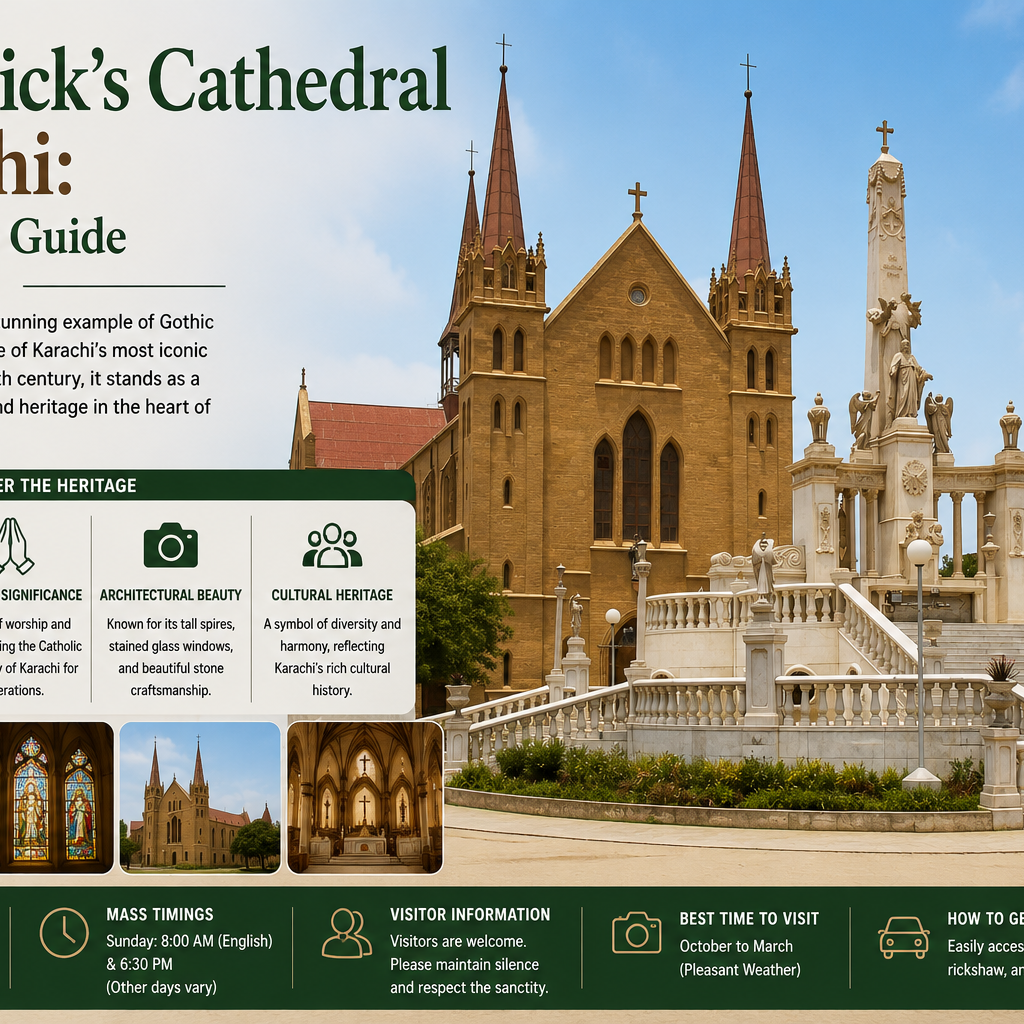
St Patrick's Cathedral is one of the most beautiful colonial era churches of Karachi. It is located in the Saddar area of the central city, near the Empress Market. St Patrick's Cathedral is known for its Gothic Revival architecture its stained glass and its marble Monument to Christ the King in the grounds. It was completed in 1881 and serves as the seat of the Roman Catholic Archdiocese of Karachi. For anyone getting to know Karachi, St Patrick's Cathedral offers the colonial heritage the architecture and the Christian history of the city in one graceful landmark.
This guide explains what St Patrick's Cathedral is its history its architecture the Monument to Christ the King and how to visit.
St Patrick's Cathedral
St Patrick's Cathedral is a historic Roman Catholic cathedral located on the Shahrah e Iraq, near the Empress Market, in the Saddar area of central Karachi. It is the seat of the Roman Catholic Archdiocese of Karachi and one of the largest and oldest churches in the city. Completed in 1881 it can seat around 1,500 worshippers. It is one of the most cherished heritage landmarks of the city.
St Patrick's Cathedral has deep roots in the Christian history of the region. The first church in the province, also called St Patrick Church, was built on this site in 1845. The present cathedral followed as the community grew. It was designed and built by members of the Society of Jesus the Jesuits. This long history makes the cathedral a cornerstone of the Catholic community of the city.
St Patrick's Cathedral is admired for its beauty and its setting. Its Gothic Revival architecture its stained glass and its marble Monument to Christ the King draw visitors of all faiths, set amid the busy streets of the Saddar area. It remains an active place of worship and a centre of community life. This blend of heritage, architecture and living faith gives the cathedral its special character.
Quick answer: St Patrick's Cathedral is a historic Roman Catholic cathedral located in the Saddar area of central Karachi, near the Empress Market. Completed in 1881 it is the seat of the Roman Catholic Archdiocese of Karachi and seats around 1,500 worshippers. It is known for its Gothic Revival architecture its stained glass and the marble Monument to Christ the King in its grounds.
History of St Patrick's Cathedral
The history of St Patrick's Cathedral begins in the early colonial era. The first church in the province, St Patrick's Church, was built on this site in 1845 as a Carmelite mission, one of the first churches in the region. As the Catholic population of the city grew, driven by the growth of the port and the arrival of Goan and European settlers the community raised funds for a larger church. This growing community created the need for the cathedral.
St Patrick's Cathedral took shape in the late nineteenth century. Groundbreaking took place in 1878. The cathedral was consecrated on 24 April 1881 to serve the expanding community. The original small church of 1845 continued to function alongside the new building until it was destroyed by a storm in 1885. This left the cathedral as the central place of worship for the Catholic community.
St Patrick's Cathedral has been honoured over the years. It was featured on the postage stamps of the country in 1978 to mark its centenary. It was declared a protected monument in 2003 for its architectural beauty under the cultural heritage law. It has hosted many important events and figures over the decades. Government backed restoration work in recent years has helped preserve the historic building.
Architecture of St Patrick's Cathedral
St Patrick's Cathedral is celebrated for its Gothic Revival architecture. It was designed by Father Karl Wagner of the Society of Jesus with the construction supervised by two lay brothers, using local stone. The design features the vertical emphasis the pointed forms and the cross finials of the Gothic Revival style. This graceful, soaring design gives the cathedral its striking presence.
St Patrick's Cathedral is a substantial building. It measures around 52 metres by 22 metres and can seat around 1,500 worshippers, once the largest Catholic church in the country. Its exterior is relatively simple, built of local stone, yet its scale and its vertical lines make it a landmark visible from a distance across the Saddar area. This size reflects the growth of the community it was built to serve.
St Patrick's Cathedral is most beautiful inside. The interior is admired for its paintings its murals its stained glass windows and its many decorations, reminiscent of the great churches of Europe. The light through the stained glass and the fine detailing reward those who step inside from the busy streets. This contrast between the simple exterior and the rich interior is part of the appeal of the cathedral.
Monument to Christ the King
St Patrick's Cathedral is famous for the Monument to Christ the King in its grounds. This white marble monument is around 54 feet high, located at the front of the cathedral, overlooking the busy Shahrah e Iraq. It was the only structure of its kind in the city and is popular with visitors. This striking monument is one of the icons of the cathedral.
The Monument to Christ the King was built to mark the Jesuit mission. The idea emerged in the 1920s, tied to the Feast of Christ the King and the processions held through the Saddar area. The Catholic community formed a board to raise funds and build it. The monument was completed and inaugurated in 1931, after several years of planning and construction with celebrations lasting many days. This effort reflected the devotion of the community.
The Monument to Christ the King holds a crypt and fine detail. The crypt beneath the monument can seat around 150 people and is decorated with murals, along with a figure of St Francis Xavier the missionary whose work shaped the Christian history of the region. The monument has suffered from weather and time over the decades, prompting restoration efforts to preserve it. This monument with its crypt adds depth to a visit.
Visiting St Patrick's Cathedral
St Patrick's Cathedral is one of the most rewarding heritage sites to visit in Karachi, offering colonial architecture, stained glass and a striking monument in one place. It remains an active place of worship, so it is often most accessible around the times of Sunday mass, when the mood is festive, though access can be restricted at other times for security. Visitors of all faiths are welcome with respectful dress and behaviour expected.
St Patrick's Cathedral is reached easily as it is located in the central Saddar area, near the Empress Market. It is accessible by car, taxi, rickshaw and ride hailing service, in one of the busiest parts of the city. The cathedral and its grounds with the Monument to Christ the King, are best explored on foot. The cooler months from around November to March offer the most comfortable time to visit. A trip combines well with the nearby heritage landmarks of the Saddar area.
Places near St Patrick's Cathedral
St Patrick's Cathedral is located within reach of many landmarks and useful places in central Karachi. The Empress Market lies nearby. The Saddar bazaars and shopping streets surround it. The St Patrick's High School is one of the oldest schools in the city, next to the cathedral.
The Frere Hall and the gardens of Bagh e Jinnah are a short distance away. The National Museum of Pakistan and the Karachi Zoo are within reach in the central city. The Mazar e Quaid the national mausoleum, is a short drive away. The colonial era buildings of the I.I. Chundrigar Road lie towards the port.
Frequently asked questions
Where is St Patrick's Cathedral located? St Patrick's Cathedral is located on the Shahrah e Iraq, near the Empress Market, in the Saddar area of central Karachi. It is close to the Empress Market the St Patrick High School and the Saddar bazaars within reach of the Frere Hall and the Mazar e Quaid. It is easily reached by car, taxi, rickshaw and ride hailing service.
When was St Patrick's Cathedral built? St Patrick's Cathedral was consecrated on 24 April 1881, after groundbreaking in 1878. The first church on the site, St Patrick's Church, was built in 1845 as one of the first churches in the province. The cathedral was built to serve the growing Catholic community of the city.
What is the architecture of St Patrick's Cathedral like? St Patrick's Cathedral is built in the Gothic Revival style, designed by Father Karl Wagner of the Society of Jesus and built from local stone. It measures around 52 metres by 22 metres with a vertical emphasis, pointed forms and cross finials. Its simple exterior contrasts with a rich interior of paintings, murals and stained glass.
What is the Monument to Christ the King? The Monument to Christ the King is a white marble monument, around 54 feet high, in the grounds of St Patrick's Cathedral, overlooking the Shahrah e Iraq. It was built to commemorate the Jesuit mission in the province and inaugurated in 1931. It has a crypt seating around 150 people, decorated with murals.
Can visitors of all faiths enter St Patrick's Cathedral? Yes. Visitors of all faiths are welcome at St Patrick's Cathedral with respectful dress and behaviour expected. As an active place of worship it is often most accessible around the times of Sunday mass, though access can be restricted at other times for security. It is worth checking before a visit.
Is St Patrick's Cathedral the largest church in Karachi? St Patrick's Cathedral was once the largest Catholic church in the country, seating around 1,500 worshippers. The larger St Peter Church, seating around 5,000, was later built elsewhere in the city. St Patrick's remains the seat of the Roman Catholic Archdiocese of Karachi and one of the most historic churches in the city.
St Patrick's Cathedral is one of the most beautiful colonial era churches of Karachi and a cornerstone of the Christian community of the city. Completed in 1881 and built by the Jesuits on the site of the first church in the province it has served for well over a century as the seat of the Roman Catholic Archdiocese of Karachi. Its Gothic Revival architecture its stained glass and its marble Monument to Christ the King make St Patrick's Cathedral a treasure of the heritage of the city.
St Patrick's Cathedral brings together colonial history, fine architecture and living faith in one graceful landmark. Its soaring Gothic form and its rich interior reward those who step inside from the busy streets while its Monument to Christ the King with its crypt, endures as a symbol of the Jesuit mission in the region. Set in the central Saddar area near the Empress Market and the other landmarks of the city it is easy to reach and to combine with a wider look at the heritage of the city. Whether you visit St Patrick's Cathedral for its architecture its history or its striking monument it remains one of the most cherished heritage landmarks in Karachi and a symbol of the diverse story of the city.