Samadhi of Ranjit Singh and Lahore's Sikh Heritage
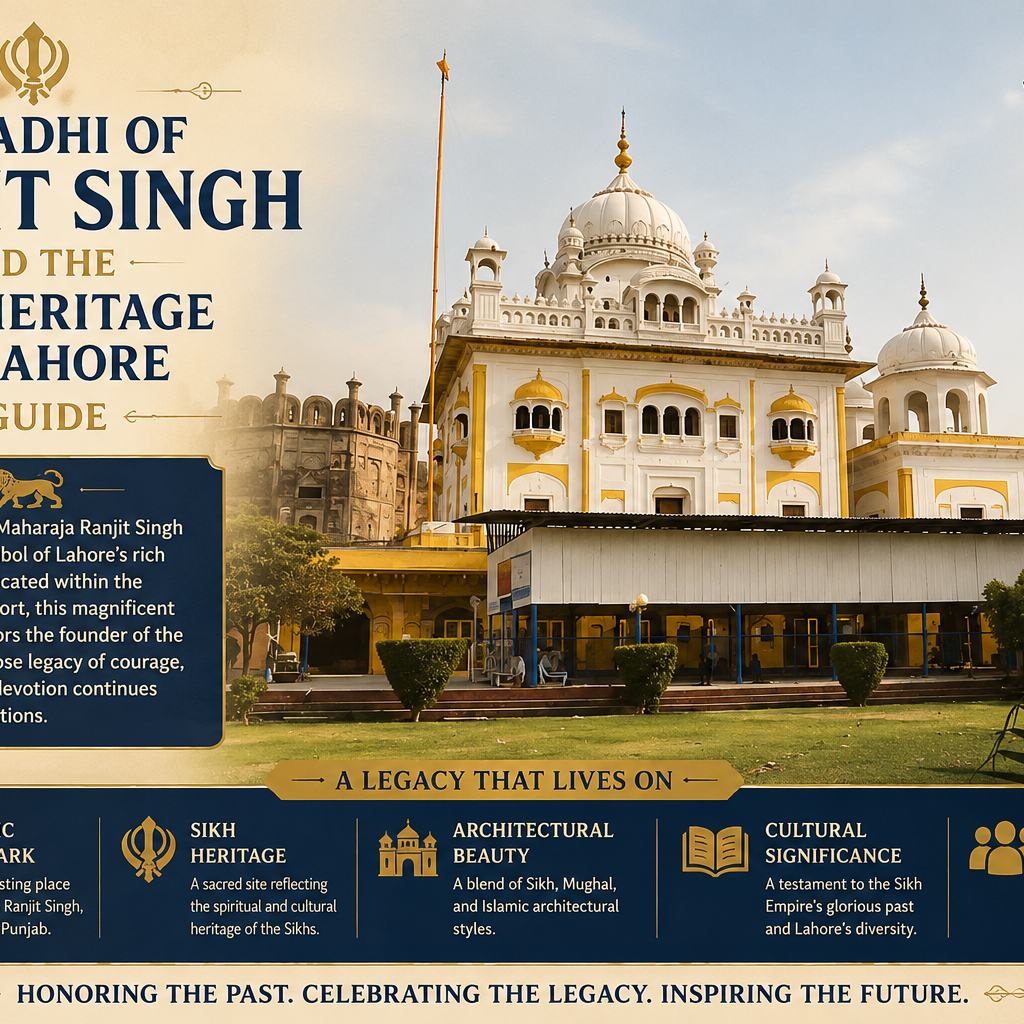
The Samadhi of Ranjit Singh is one of the most important Sikh monuments of Lahore. It is located within the Walled City, beside the Lahore Fort and the Badshahi Mosque. The Samadhi of Ranjit Singh houses the funerary urns of Maharaja Ranjit Singh, the founder of the Sikh Empire. It is known for its blend of Sikh, Hindu and Mughal architecture, its gilded domes and its fine frescoes. For anyone getting to know Lahore, the Samadhi of Ranjit Singh and the wider Sikh heritage of the city open a window into an important chapter of the history of the region.
This guide explains what the Samadhi of Ranjit Singh is, its history, its architecture and its place among the Sikh heritage sites of the city, told with respect for its religious significance.
Samadhi of Ranjit Singh
The Samadhi of Ranjit Singh is a 19th century memorial building located in the Walled City of Lahore. It houses the funerary urns holding the ashes of Maharaja Ranjit Singh, the founder and first maharaja of the Sikh Empire. It is also known as the Marhi of Ranjit Singh. It is located adjacent to the Lahore Fort and the Badshahi Mosque, beside the Gurdwara Dera Sahib and overlooking the Hazuri Bagh to its south, among the greatest Mughal and Sikh monuments of the city.
The Samadhi of Ranjit Singh is a monument of great importance, regarded as the last major state funded architectural project of independent Punjab before the British annexation of 1849. It reflects the art and architecture of the Sikh Empire at its height. It functioned for many decades as both a mausoleum and a place where the Guru Granth Sahib was kept. It draws Sikh pilgrims from across the world especially around the death anniversary of Maharaja Ranjit Singh.
Quick answer: Samadhi of Ranjit Singh is a nineteenth-century monument building which is situated in Walled City of Lahore next to Lahore Fort and Badshahi Masjid. This building consists of the ashes of the founder of the Sikh empire. Samadhi of Maharaja Ranjit Singh was Known for the fusion of Sikh, Hindu and Mughal architecture. It is located next to Gurdwara Dera Sahib.
Maharaja Ranjit Singh and the Sikh Empire
The story of the Samadhi begins with Maharaja Ranjit Singh. He lived from 1780 to 1839 and founded the Sikh Empire. He ruled it from Lahore from around 1799 to his death. He united the Sikh misls into a centralised state and expanded its territory across the Punjab, from the Sutlej River to the Khyber Pass at its height. He is remembered for his strong leadership, his military skill and his patronage of the arts.
Maharaja Ranjit Singh was famous for his religious tolerance. His state supported the arts and drew on the shared traditions of the region, blending Sikh, Hindu and Muslim elements. He held a deep personal devotion to the Guru Granth Sahib and is remembered for endowing major Sikh sites, including the gold plating of the Harmandir Sahib, the Golden Temple, in Amritsar. He left a lasting mark on Lahore, making his presence felt at the Lahore Fort and giving the city the Hazuri Bagh gardens that link the Badshahi Mosque and the Alamgiri Gate.
Building and its history
The construction of the Samadhi of Ranjit Singh has a layered history. Maharaja Ranjit Singh died in June 1839. The site was chosen for his cremation. Construction of the memorial began in August 1839, started by his son and successor, Maharaja Kharak Singh, on the very spot where Maharaja Ranjit Singh was cremated. It was delayed by the internal struggles within the Sikh Empire. The youngest son, Maharaja Duleep Singh, completed the building in 1848. The work was still being finished when the British annexed the Punjab in 1849. The new rulers undertook repairs completed in 1851.
The Samadhi of Ranjit Singh holds several memorials. Two smaller monuments to the west commemorate Maharaja Kharak Singh and his grandson Nau Nihal Singh, along with their wives, making the complex a dynastic memorial as well as the resting place of Maharaja Ranjit Singh. The building was repaired by the British in the mid 19th century and has been cared for since. It suffered damage in the earthquake of 2005, after which restoration efforts repaired it, safeguarding its historical and cultural importance.
Architecture and art
The Samadhi of Ranjit Singh is celebrated for its architecture. It is a free standing structure built with Nanak Shahi bricks, accented with red sandstone and marble. The building is square in plan and double storeyed, crowned with a central dome and surrounded by smaller domes and cupolas. It marries Sikh, Hindu and Mughal styles in one building with gilded fluted domes, cupolas and ornate carvings. The front doorway, carved from red sandstone, depicts figures from Hindu tradition, a reflection of the religious diversity of the reign of Maharaja Ranjit Singh.
The Samadhi of Ranjit Singh is famous for its interior art. The interior features a double height hall with a chatri, a domed pavilion, in the centre marking the resting place. The walls and the underside of the dome are decorated with fine frescoes, regarded as among the finest examples of Sikh fresco painting with themes including the Sikh gurus, scenes from the epics and floral designs. Its decoration draws on the influence of the Hill States and Jammu on Sikh art. Scholars regard it as an original contribution to the cultural history of the region.
Sikh heritage across the city
The Samadhi of Ranjit Singh is one of several important Sikh heritage sites in Lahore, a city that holds a rich Sikh history tied to the Sikh Empire and the gurus. The Gurdwara Dera Sahib is the most sacred Sikh site in the city. It is located beside the Samadhi and marks the spot where Guru Arjan Dev, the fifth guru of Sikhism, was martyred in 1606. Guru Arjan Dev compiled the Adi Granth, the principal part of the Sikh scriptures. The Gurdwara Dera Sahib with its golden dome is one of the holiest Sikh sites in the country.
Lahore holds other important Sikh connections. The Hazuri Bagh, laid out by Maharaja Ranjit Singh between the Badshahi Mosque and the Lahore Fort, holds the Hazuri Bagh Baradari, a marble pavilion built in his reign. The Lahore Fort holds Sikh era additions. The wider country holds some of the holiest Sikh sites in the world: the Gurdwara Nankana Sahib, at the birthplace of Guru Nanak, the founder of Sikhism, lies near Lahore. The Gurdwara Kartarpur Sahib, linked to the final years of Guru Nanak, was opened to pilgrims through the Kartarpur Corridor in 2019.
Visiting the Samadhi and Sikh sites
The Samadhi of Ranjit Singh is one of the most significant heritage sites to visit in the Walled City of Lahore, offering a window into the Sikh era. It suits those interested in history, architecture and the shared heritage of the region. Access is subject to rules that respect its religious role: visiting the site is generally reserved for local or visiting Sikhs with others requiring special permission from the Evacuee Trust Property Board. This body manages the site. It is important to treat the site with the respect due to a place of worship and pilgrimage.
The Samadhi of Ranjit Singh is reached easily as it is located in the Walled City, beside the Lahore Fort and the Badshahi Mosque. It is accessible by car, taxi, rickshaw and ride hailing service. Modest, respectful dress is expected with visitors following the customs of the site, such as covering the head. The cooler months from around October to March offer the most comfortable time to visit. A visit combines well with the Lahore Fort, the Badshahi Mosque, the Hazuri Bagh and the Gurdwara Dera Sahib. Visitors should always confirm the current access rules for the Sikh sites in advance.
Places near the Samadhi of Ranjit Singh
The Samadhi of Ranjit Singh is located within reach of many landmarks in the Walled City of Lahore. The Lahore Fort is located beside it, the Badshahi Mosque is adjacent with the Gurdwara Dera Sahib and the Hazuri Bagh next to the monument. The Minar e Pakistan and the Greater Iqbal Park are close by with the Roshnai Gate and the other gates of the Walled City nearby. The Fort Road Food Street is within walking distance for a meal, the Wazir Khan Mosque and the Delhi Gate lie within the Walled City with the Data Darbar a short drive away.
Frequently asked questions
Where is the Samadhi of Ranjit Singh located? The Samadhi of Ranjit Singh is located within the Walled City of Lahore, adjacent to the Lahore Fort and the Badshahi Mosque. It is located beside the Gurdwara Dera Sahib and overlooks the Hazuri Bagh to its south, among the greatest historic monuments of the city.
Who was Maharaja Ranjit Singh? Maharaja Ranjit Singh lived from 1780 to 1839 and founded the Sikh Empire and ruled it from Lahore. He united the Sikh misls into a centralised state and expanded its territory across the Punjab. He is remembered for his leadership, his patronage of the arts and his religious tolerance.
When was the Samadhi of Ranjit Singh built? Construction of the Samadhi of Ranjit Singh began in August 1839, after the death of Maharaja Ranjit Singh, started by his son Maharaja Kharak Singh. It was completed by his youngest son, Maharaja Duleep Singh, in 1848. The British undertook repairs completed in 1851.
What is the architecture of the Samadhi like? The Samadhi of Ranjit Singh blends Sikh, Hindu and Mughal styles. It is built with Nanak Shahi bricks, accented with red sandstone and marble. It is crowned with gilded fluted domes and cupolas. The interior features fine frescoes regarded as among the finest examples of Sikh fresco painting.
Can anyone visit the Samadhi of Ranjit Singh? Visiting the Samadhi of Ranjit Singh is generally reserved for local or visiting Sikhs with others requiring special permission from the Evacuee Trust Property Board. This body oversees the site. Before visiting you should check the current access rules and arrangements before planning a visit and treat the site with respect.
What other Sikh heritage sites are near Lahore? The Gurdwara Dera Sahib is located beside the Samadhi and marks the martyrdom of Guru Arjan Dev. The Hazuri Bagh holds a Sikh era pavilion. Further afield, the Gurdwara Nankana Sahib, at the birthplace of Guru Nanak, along with the Gurdwara Kartarpur Sahib, are among the holiest Sikh sites in the world.
The Samadhi of Ranjit Singh is one of the most important Sikh monuments of Lahore and a memorial to a remarkable chapter in the history of the region. Located in the Walled City beside the Lahore Fort and the Badshahi Mosque, it houses the funerary urns of Maharaja Ranjit Singh, the founder of the Sikh Empire. Its blend of Sikh, Hindu and Mughal architecture, its gilded domes and its fine frescoes make the Samadhi of Ranjit Singh a treasure of the art of the Sikh era.
The Samadhi of Ranjit Singh is at the heart of the Sikh heritage of the city. Beside it, the Gurdwara Dera Sahib marks the martyrdom of Guru Arjan Dev, while the Hazuri Bagh and the wider sites tell the story of the Sikh era of the city. Together with the Gurdwara Nankana Sahib and the Gurdwara Kartarpur Sahib, these sites make the region around Lahore a vital centre of Sikh heritage and pilgrimage. For those able to visit with respect for its religious significance and its access rules, it offers a moving window into the Sikh story of the city and the legacy of one of its most storied rulers.