Port of Karachi: A Complete Guide
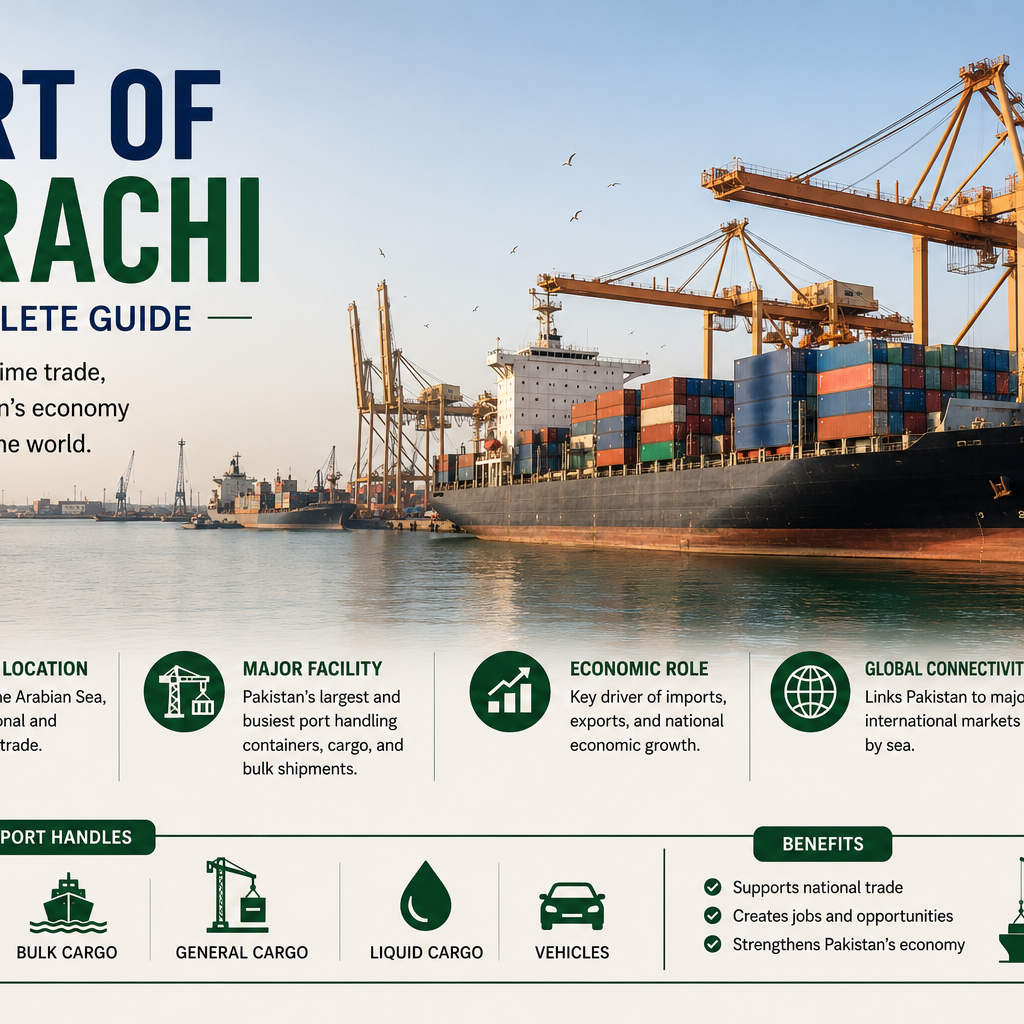
The Port of Karachi is the gateway of the country to the world. As the largest and busiest seaport in the country it handles the greater part of the sea trade of the country, connecting its factories, farms and markets to ports across the globe. The Port of Karachi is a lifeline of the economy a deep water harbour on the Arabian Sea with a history stretching back well over a century. It is the beating heart of the trade of the country. For anyone curious about how the country connects to the world, this guide covers the history the workings and the importance of the great port.
This guide covers the Port of Karachi from its history and location to its terminals its trade and its future.
Quick answer: The Port of Karachi is the largest and busiest seaport in the country, handling more than half of its sea trade. It is a deep water natural harbour on the Arabian Sea, in the Kiamari area near the old city. It opened in 1857 and is managed by the Karachi Port Trust, holding container, oil, coal and bulk terminals across its East and West Wharves. It handles tens of millions of tonnes of cargo a year and is a lifeline of the economy of the country.
Gateway of the country
The Port of Karachi is the busiest seaport in the country. It is the largest and busiest of the seaports of the country, one of the biggest in South Asia, handling the greater part of the sea trade of the country. This role makes it the main gateway of the country.
The port connects the country to the world. Through its wharves pass the imports and exports of the country from oil and machinery to grain, textiles and containers of every kind. This flow of goods links the country to markets across the globe.
The port is a lifeline of the economy. As the main gateway for the trade of the country the port is vital to its economy, carrying the goods that keep its industries and markets running. This importance is felt across the whole country.
From a natural harbour to a great port
The port grew from a natural harbour. Karachi began as a fishing village with a fine natural harbour. The British developed this into a modern port in the 19th century. This harbour was the reason the city grew as it did. It is covered in more detail in the history guide.
The port opened in the mid 19th century. The modern port took shape from around 1857 as the British built wharves and dredged the harbour to handle ever larger ships. This development turned the town into a major port city. It set the course for the growth of the city.
The Karachi Port Trust has run the port for over a century. The Karachi Port Trust was formed in the 1880s to manage the growing port and has overseen its operations ever since. This long stewardship has shaped the modern port. It continues to guide the port today.
Strategic natural harbour
The port has a fine deep water harbour. The Port of Karachi is a natural harbour on the north shore of the Arabian Sea, deep enough to handle large modern ships. This natural depth is one of its great advantages. It allows the port to serve the largest vessels.
The port lies in the Kiamari area. The port is located in the Kiamari area, close to the old city and the business district along with the industrial zones of the city. This central location links the port to the trade of the city. It keeps the goods flowing to and from the port with ease.
The port lies on major shipping routes. The position of the port on the Arabian Sea places it near major shipping lanes, including the approaches to the Strait of Hormuz. This strategic location is a great advantage for trade. It connects the country to ports across the region and beyond.
Terminals and the infrastructure
The port is built around two great wharves. The Port of Karachi is arranged along its East Wharf and West Wharf, holding dozens of berths for ships of every kind. These wharves are the heart of the working port. They handle the vast flow of cargo.
The port holds modern container terminals. The port operates several container terminals, including the Karachi International Container Terminal and the Pakistan International Container Terminal along with newer facilities, handling millions of containers a year. These terminals are the engine of modern trade. They keep the containers moving swiftly.
The port handles oil, coal and bulk cargo too. Beyond containers the port holds oil terminals a coal terminal and bulk cargo facilities along with a ship repair yard and other services. This range of facilities lets the port handle every kind of cargo. It makes the port a complete trading hub.
Lifeline of the economy
The port handles the bulk of the trade of the country. The Port of Karachi handles more than half of the sea trade of the country, making it by far the most important port in the country. This share of the trade is the measure of its importance.
The port moves tens of millions of tonnes a year. The port handles tens of millions of tonnes of cargo each year along with millions of containers with record volumes reached in recent years. This vast throughput keeps the economy supplied. It grows year after year with the trade of the country.
The port helps provide work for many industries. It provides employment in a wide array of industries, such as the dock workers and the shipping companies that make use of the port, to the industries which depend on it. The economic importance of the port does not just end there.
Port of the future
The port is being modernised for the years ahead. The Karachi Port Trust is working to modernise the port with new terminals, better equipment and digital systems to track cargo. This modernisation aims to keep the port competitive. It prepares the port for rising trade.
The port is improving its connections. Plans are in hand to improve the rail and road links of the port, so that cargo can move more smoothly between the port and the rest of the country. This better connectivity will speed the flow of trade. It will strengthen the role of the port as a gateway.
The port is turning greener. The port is working towards greener operations with plans for renewable energy and steps to reduce its impact on the environment. This green shift is part of the future of the port. It aims to balance trade with care for the environment.
Frequently asked questions
What is the Port of Karachi? The Port of Karachi is the largest and busiest seaport in the country and one of the biggest in South Asia. It is a deep water natural harbour on the Arabian Sea, in the Kiamari area near the old city. It handles more than half of the sea trade of the country from oil and machinery to grain, textiles and containers, making it the main gateway of the country to the world.
Where is the Port of Karachi located? The Port of Karachi is located on the north shore of the Arabian Sea, in the Kiamari area of the city, close to the old city and the business district and near the industrial zones. Its position places it near major shipping routes, including the approaches to the Strait of Hormuz. It lies near the Manora and the Baba and Bhitt islands.
How old is the Port of Karachi? The modern Port of Karachi took shape from around 1857, when the British developed the natural harbour of the city into a major port with wharves and dredged channels. The Karachi Port Trust was formed in the 1880s to manage the growing port. The harbour itself has served the city since its early days as the fishing village of Kolachi.
How much trade does the Port of Karachi handle? The Port of Karachi handles more than half of the sea trade of the country, making it by far the most important port in the country. It processes tens of millions of tonnes of cargo each year along with millions of containers with record volumes reached in recent years. This vast throughput makes the port a lifeline of the economy of the country.
Who manages the Port of Karachi? The Port of Karachi is managed by the Karachi Port Trust a federal agency under the Ministry of Maritime Affairs. The Karachi Port Trust was formed in the 1880s and oversees all the operations of the port from guiding ships and managing the wharves to developing new terminals and infrastructure. Its head office is on Napier Mole Road near the port.
What terminals does the Port of Karachi have? The Port of Karachi is arranged along its East Wharf and West Wharf with dozens of berths. It holds several container terminals, including the Karachi International Container Terminal and the Pakistan International Container Terminal along with newer facilities. The port also has oil terminals a coal terminal, bulk cargo facilities and a ship repair yard, letting it handle every kind of cargo.
Gateway to the country
The Port of Karachi is the gateway of the country to the world and a lifeline of its economy. A deep water natural harbour on the Arabian Sea, developed by the British from around 1857 and run ever since by the Karachi Port Trust it handles the greater part of the sea trade of the country. Its wharves its container and oil terminals and its strategic position make the Port of Karachi the beating heart of the trade of the country.
The story of the port is bound up with the story of the city itself. From the fine natural harbour that first drew traders to the fishing village of Kolachi to the modern terminals handling millions of containers a year the port has carried the goods and the fortunes of the country for well over a century. As it modernises for the years ahead with new terminals, better links and greener operations the Port of Karachi looks set to remain the main gateway of the country to the world, connecting the industries and markets of the country to ports across the globe.