Neighbour hoods and Culture of Old Karachi: A Complete Guide
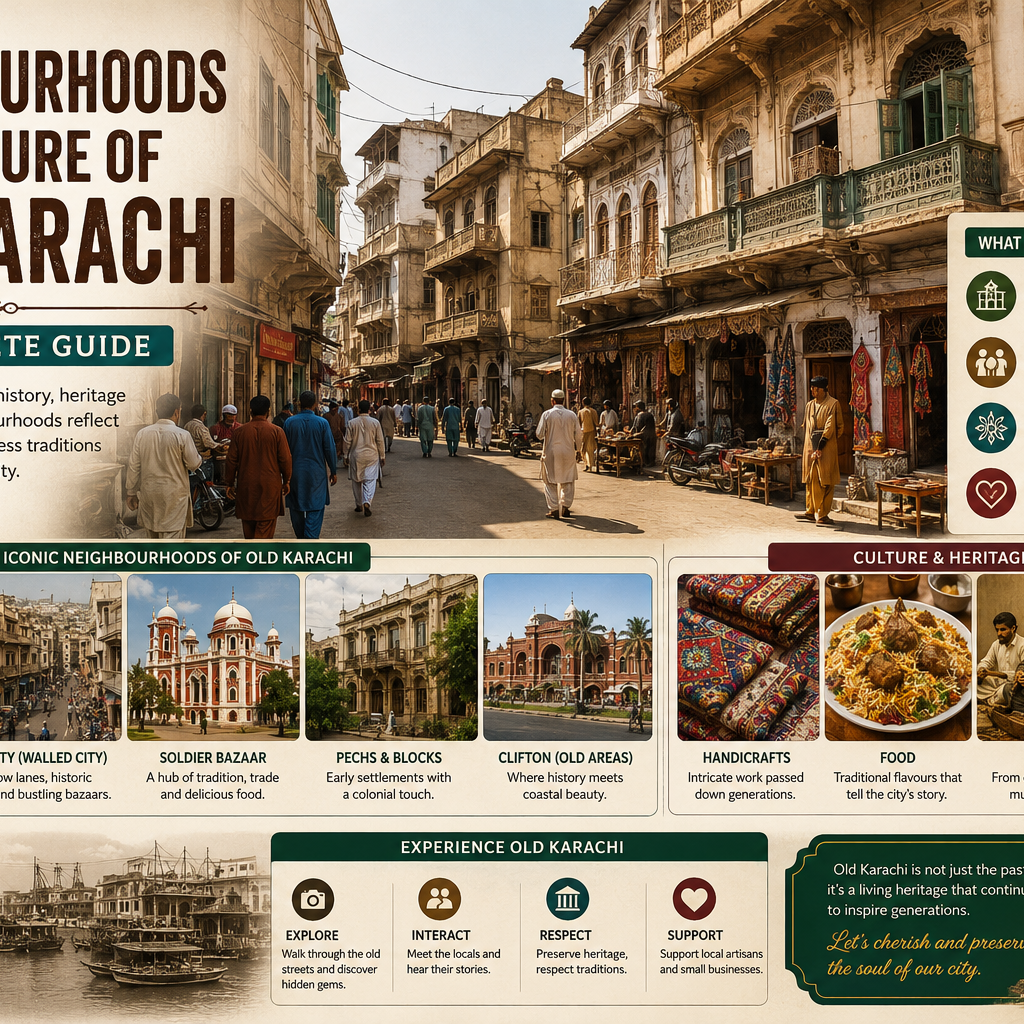
Old Karachi is the historic soul of the city. In the narrow lanes and bustling bazaars of the old quarters, from Kharadar and Mithadar to Saddar and Lyari the true spirit of the city comes alive. The neighbour hoods and culture of old Karachi tell the story of how a small fishing village grew into a great city, through its historic gates its grand colonial buildings its old bazaars and its meeting of many communities. This is where the city began and where its heart still beats. For anyone curious about the roots and the character of the city, this guide explores the old neighbour hoods and the rich culture they hold.
The current guide highlights the neighborhoods and the culture of the old Karachi including its historical gates and bazaars as well as the communities and the heritage of the old city.
Quick answer: The Old Karachi area is the first city that had the focus on the neighborhood of Kharadar and Mithadar that were names of the two gates of the old walled city. The Saddar became the focal point of colonial government and business while the Lyari area is one of the oldest. The old city includes the active bazaars the colonial architecture and diverse religions and ethnicities.
Historic heart of the city
Old Karachi is where the city began. The old quarters near the port are the original core of the city, where the fishing village of Kolachi first grew into a town. This is the birthplace of the modern city, covered in more detail in the history guide.
The old city is a world of narrow lanes and bazaars. The old neighbour hoods are a maze of narrow streets, bustling bazaars, old havelis and historic buildings alive with the energy of daily life. This dense, lively character is the charm of the old city aworld away from the modern areas.
The old city holds the true spirit of the city. Beneath the bustle the old quarters carry the history the traditions and the diversity that made the city what it is. This living heritage is the soul of the city.
Old gates: Kharadar and Mithadar
The old city grew within two famous gates. In the 18th century the town was ringed by a defensive wall with two gates. These give their names to the neighbour hoods of Kharadar and Mithadar today. These two areas form the original core of the city. They are the oldest part of Karachi.
The gates were named for salt and sweet water. The gate facing the sea was called Kharadar, meaning the salt gate while the gate facing the Lyari river was called Mithadar, meaning the sweet gate. These names have outlived the walls themselves. They are a living link to the earliest days of the city.
The gates are gone but the names live on. The wall and its gates were pulled down by the British in the mid 19th century, yet the names of Kharadar and Mithadar still mark these historic neighbour hoods. The old quarters remain busy centres of trade and life.
Saddar the colonial centre
Saddar grew as the heart of the colonial city. The name Saddar comes from a word meaning centre. Under British rule the area became the administrative and commercial hub of the city. This role placed Saddar at the heart of the growing city that it remains today.
Saddar holds many grand colonial landmarks. The area is home to some of the finest colonial era buildings and markets of the city, from the Empress Market to the elegant Frere Hall. These landmarks are covered in their own dedicated guides. They are the architectural treasures of the old city.
Saddar is a bustling commercial centre. The area teems with markets, shops and offices, from electronics and books to clothes and antiques, in a lively blend of old and new. This commercial energy has been the character of Saddar for well over a century.
Lyari and the oldest settlements
Lyari is one of the oldest settlements of the city. Lying to the west of Saddar, Lyari is among the oldest and most storied neighbour hoods of the city, taking its name from a tree that grows along the riverbanks. This deep history makes it a cornerstone of the old city with a strong and proud identity.
Lyari has a rich and distinctive culture. The area is known for its love of football and boxing its music and its close knit, diverse community, including families of African and Baloch heritage. This distinctive culture is a large part of its character. It has produced many famous sportsmen and artists.
The old city holds other historic quarters too. Neighbour hoods such as Ranchore Line, one of the oldest in the city add to the historic fabric of the old quarters. These old areas carry their own histories and communities, part of the rich heritage of the old city.
Old bazaars and quarters in Karachi
The old city is famous for its bazaars. The old quarters hold some of the busiest and most historic bazaars of the city, from the Jodia Bazar to the Bolton Market, selling everything from cloth and spices to hardware and household goods. These bustling markets, trading for generations are the beating heart of the old city.
The bazaars reflect the trades of the old city. Areas such as Kharadar and Mithadar have long been centres of the textile and garment trade with wholesale markets and old trading streets. This commercial heritage is woven into the old city. It remains a hub of trade today.
The old quarters carry names of history. Neighbour hoods such as Aram Bagh, Soldier Bazar and Juna Market carry names that reach back through the history of the city, each with its own story. These historic names are a map of the past of the old city.
Meeting of many communities
Old Karachi is a meeting of many peoples. The old quarters have long been home to a rich mix of communities, from Memon, Bohra and Ismaili traders to Gujarati, Kutchi and Baloch families. This diversity is the great strength of the old city. It has made the old quarters a true melting pot.
The old city is a place of many faiths. The old neighbour hoods are known for their diversity and unity, home to people of many faiths living side by side with mosques, temples and churches among the lanes. This harmony is a proud part of the character of the old city. It reflects the welcoming spirit of the city.
The communities formed the culture and the trade. The individual communities had their distinct culture, foods, and trades from the textiles in the markets to the famous sweets and snacks in the old town.
Heritage and character of the old Karachi
The old city holds treasures of architecture. Among the lanes stand grand old buildings, from the yellow stone Karachi Port Trust Building, built in 1915 in a blend of styles, to old havelis, temples and colonial offices. These heritage buildings are the pride of the old city. They are a living museum of its history.
The old city is famous for its food. The old quarters are a paradise for food lovers, from the legendary Burns Road food street to the biryani and breakfast joints of Kharadar. These are covered in their own dedicated guides. No visit to the old city is complete without a meal.
The old city rewards those who explore on foot. The narrow lanes the bustling bazaars and the historic buildings are best discovered slowly, on foot with time to soak up the atmosphere. This gentle exploring is the finest way to see the old city. It reveals a side of the city many never see.
Frequently asked questions
What is old Karachi? Old Karachi is the original core of the city the historic quarters near the port where the fishing village of Kolachi first grew into a town. It is centred on the neighbour hoods of Kharadar and Mithadar the two gates of the old walled town along with Saddar and Lyari. The old city is known for its narrow lanes, bustling bazaars, grand colonial buildings and diverse communities.
What are Kharadar and Mithadar? Kharadar and Mithadar are the two oldest neighbour hoods of the city, named after the two gates of the old walled town built in the 18th century. Kharadar means the salt gate, facing the sea while Mithadar means the sweet gate, facing the Lyari river. The wall and gates were pulled down by the British in the mid 19th century, yet the names survive as historic neighbour hoods today.
Why is Saddar important in old Karachi? Saddar is important because it grew as the administrative and commercial centre of the city under British rule its name coming from a word meaning centre. It holds some of the finest colonial era landmarks of the city, such as the Empress Market and Frere Hall along with bustling markets for electronics, books, clothes and antiques. It remains a central and lively district today.
What is Lyari known for? Lyari is one of the oldest settlements of the city, taking its name from a tree that grows along the riverbanks. It is known for its love of football and boxing its music and its close knit, diverse community, including families of African and Baloch heritage. It has a strong and proud identity and has produced many famous sportsmen and artists over the years.
What makes old Karachi culturally rich? Old Karachi is culturally vibrant since it boasts a variety of communities and religions coexisting in harmony with each other, such as Memons, Bohras, and Ismailis who were engaged in trade, Gujaratis, Kutchis, and Baluchis. Old Karachi has thus been a hotbed of traditions, food, professions, and religious institutions, including mosques, temples, and churches. It has truly been a potpourri of cultures.
Is old Karachi worth visiting? Yes, old Karachi is well worth visiting for its history its architecture and its atmosphere. The narrow lanes, bustling bazaars, grand colonial buildings and famous food streets offer a glimpse of the city as it began. It is best explored on foot with time to soak up the energy of the old quarters. It reveals a historic and cultural side of the city that many visitors never see.
Soul of the city
Old Karachi is the historic and cultural soul of the city, where a small fishing village grew into a great metropolis. From the historic gates of Kharadar and Mithadar to the colonial grandeur of Saddar the storied lanes of Lyari and the bustling bazaars of the old quarters the old city holds the roots and the heart of the whole city. Its historic buildings its old markets and its rich meeting of communities and faiths make old Karachi a living treasure of history and culture.
The best way to know the old city is to wander its lanes and take in its life. Explore the bazaars of Kharadar and Mithadar admire the colonial landmarks of Saddar, feel the proud spirit of Lyari and feast on the famous food of the old quarters. Along the way you will find grand old buildings, historic markets and a diverse community that has lived side by side for generations. Whether you come to old Karachi for its history its architecture its food or its culture the old quarters offer a glimpse of the true soul of the city, best discovered slowly and on foot.