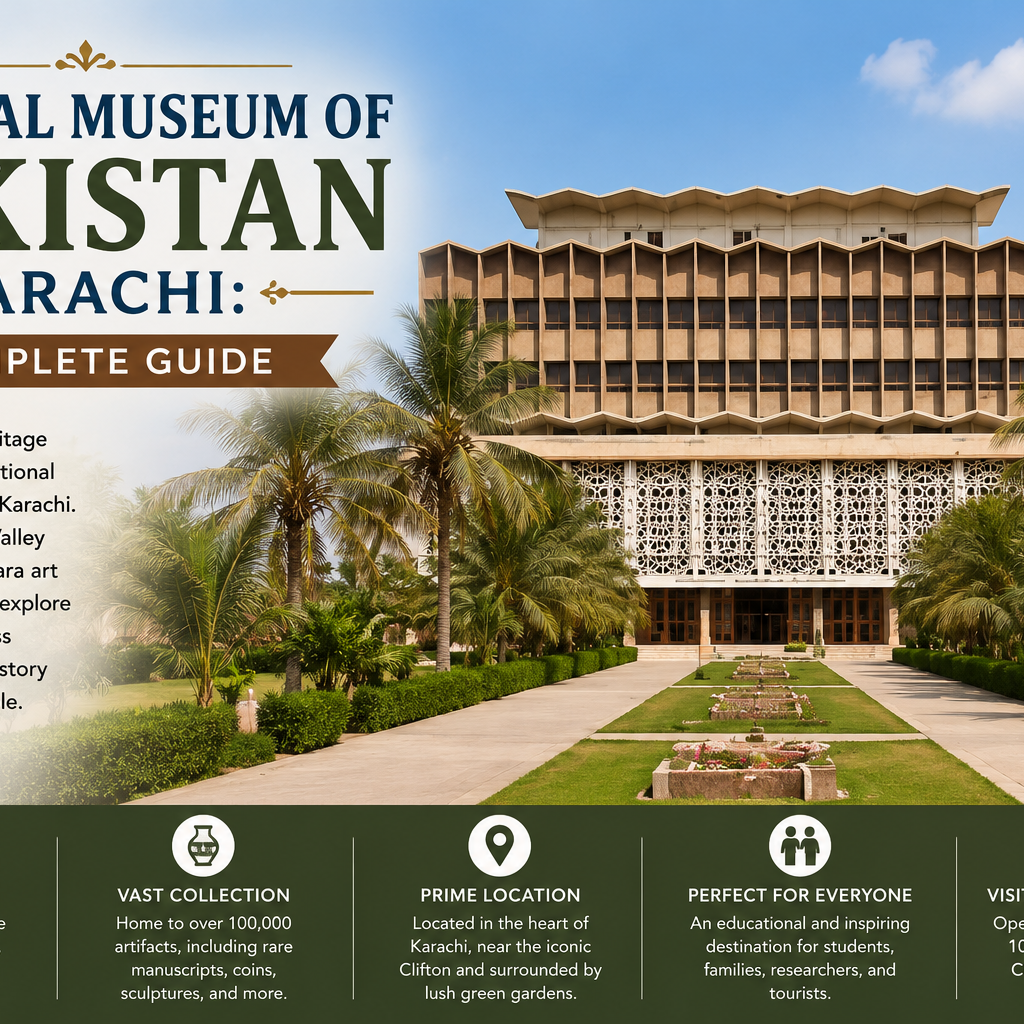
National Museum of Pakistan Karachi: A Complete Guide
The National Museum of Pakistan is one of the most important cultural institutions of Karachi. It is located in the historic Burns Garden, on the Dr Zia ud din Ahmed Road in the central part of the city. The National Museum of Pakistan is known for its eleven galleries its Quran Gallery its Indus Valley relics and its collection of tens of thousands of ancient coins. It was established in 1950 as the national repository of the heritage of the country. For anyone getting to know Karachi, the National Museum of Pakistan offers a journey through the history of the region, from the prehistoric era to the birth of the country in one rewarding site.
This guide explains what the National Museum of Pakistan is its history its galleries and collections and how to visit.
National Museum of Pakistan
The National Museum of Pakistan is the leading public museum of the country, located in Burns Garden in the central part of Karachi. It was established in 1950 to collect, preserve, exhibit and study the records of the cultural history of the country. It holds a vast collection across eleven galleries, spanning many eras of the history of the region. It is one of the most treasured cultural institutions of the city.
The National Museum of Pakistan holds a rich and varied collection. It traces the history of the region from prehistoric times, through the Indus Valley and Gandhara civilisations, the Islamic era and the movement for the country. Its highlights include the famous Quran Gallery, the Indus Valley relics and a huge collection of ancient coins. This depth of collection makes the museum a treasure house of heritage.
The National Museum of Pakistan is a cornerstone of national identity. It was founded after independence to tell the story of the country and its people, bringing together the pre Islamic and Muslim eras of the region. It serves as a place of learning for students, scholars and visitors.
Quick answer: The National Museum of Pakistan is the country’s foremost public museum and is situated in the Burns Garden in central Karachi. It was established in 1950. It holds a vast collection across eleven galleries, spanning the Indus Valley and Gandhara civilisations islamic art and the movement for the country. It is known for its Quran Gallery its Indus Valley relics and its collection of ancient coins.
History of the National Museum
The history of the National Museum of Pakistan begins soon after independence. The museum was established on 17 April 1950 in the historic Frere Hall, replacing the earlier Victoria Museum, to serve as the national repository of the heritage of the country. An advisory council was formed in 1950 to enrich the collection through new acquisitions. This founding gave the young country its own national museum.
The National Museum of Pakistan grew during its early years at Frere Hall. The museum remained at Frere Hall for around eighteen years, building its collection of antiquities and works of art. As it grew, the government decided the museum needed a separate identity and a larger, purpose built home. This growth led to the move to its present site.
The National Museum of Pakistan moved to Burns Garden in 1970. The museum was shifted to a new, purpose built building in the historic Burns Garden inaugurated in 1970, beginning with only four galleries. Over the years the collection and the galleries grew to eleven with new galleries and facilities added over time. Administration passed to the Sindh government after 2011. This growth has shaped the museum into the institution it is today.
Galleries and collections in National Museum
The National Museum of Pakistan holds its collection across eleven galleries. The galleries are arranged in roughly chronological order, from the Stone Age and the ancient civilisations through the Islamic era to the birth of the country. They cover the Indus Valley and Gandhara civilisations islamic art, miniature paintings, coins and the political history of the country. This arrangement lets visitors follow the story of the region.
The National Museum of Pakistan is famous for its Quran Gallery. The gallery holds more than 300 copies of the Quran, of which around 52 are rare handwritten manuscripts on display, some in early Kufic and other historic scripts. These manuscripts in intricate calligraphy are among the most popular exhibits. This gallery is a highlight of a visit for many.
The National Museum of Pakistan holds many other treasures. It displays Indus Valley relics from Mohenjo daro including seals and the famous Priest King figure, along with Gandhara sculptures and an ethnological gallery with life size figures of the peoples of the four provinces. It holds a collection of around 58,000 ancient coins, some very old, along with personal belongings of national figures. These collections span the whole history of the region.
Visiting the National Museum
The National Museum of Pakistan is one of the most rewarding places to visit in Karachi for history and heritage, offering a journey through the past of the region in one building. It is generally open through the day with timings that can vary between the summer and winter, so it is worth checking before a visit. The entry fee is modest, making it an affordable and educational outing.
The National Museum of Pakistan is reached easily as it is located in the central Burns Garden area, near the heart of the city. It is accessible by car, taxi, rickshaw and ride hailing service with parking available. The museum is best explored on foot, allowing time for the galleries, the collections and the garden. The cooler months from around November to March offer the most comfortable time to visit. A trip suits families, students and history enthusiasts.
Places near the National Museum
The National Museum of Pakistan is located within reach of many landmarks and useful places in central Karachi. The Burns Garden surrounds the museum. The Arts Council and the historic colleges of the area are nearby. The Frere Hall which was the original home of the museum lies a short distance away.
The Empress Market and the Saddar shopping area are within reach in the central city. The Mazar e Quaid, the national mausoleum is a short drive away. The Burns Road food street lies nearby for traditional food. The colonial era buildings of the I.I. Chundrigar Road are towards the port.
Frequently asked questions
Where is the National Museum of Pakistan located? The National Museum of Pakistan is located in the historic Burns Garden, on the Dr Zia ud din Ahmed Road in the central part of Karachi. It is close to the Arts Council, the historic colleges of the area and the Frere Hall. It is easily reached by car, taxi, rickshaw and ride hailing service.
When was the National Museum of Pakistan established? The National Museum of Pakistan was established on 17 April 1950 in Frere Hall, replacing the earlier Victoria Museum. It remained there for around eighteen years before moving to a purpose built building in Burns Garden inaugurated in 1970. It began with four galleries, later expanded to eleven over time.
What can you see at the National Museum of Pakistan? The National Museum of Pakistan holds eleven galleries covering the Indus Valley and Gandhara civilisations islamic art, miniature paintings and the history of the country. Highlights include the Quran Gallery, the Indus Valley relics from Mohenjo daro such as the Priest King figure, an ethnological gallery and a collection of around 58,000 ancient coins.
What is the Quran Gallery? The Quran Gallery of the National Museum of Pakistan holds more than 300 copies of the Quran, of which around 52 are rare handwritten manuscripts on display. Some are written in early Kufic and other historic scripts in intricate calligraphy. It is one of the most popular and distinctive galleries in the museum.
What are the daily opening hours and entry fee for the National Museum?The opening times of the National Museum of Pakistan are usually daily during daytime hours with time varying according to the season (summer/winter). The entrance fee is not much, making the museum a relatively cheap place to visit. It would be best to find out the latest schedule and entry fees.
Is the National Museum of Pakistan good for families? Yes. The National Museum of Pakistan is a rewarding and affordable outing trip for families, students and history enthusiasts. Its galleries, from the Indus Valley relics to the ethnological figures and the ancient coins, offer an educational journey through the history of the region. The surrounding Burns Garden adds a green space to relax.
The National Museum of Pakistan is one of the most important cultural institutions of Karachi and the national keeper of the heritage of the country. It was established in 1950 in Frere Hall and moved to its purpose built home in Burns Garden in 1970. It has grown into a museum of eleven galleries spanning the whole history of the region. Its Quran Gallery its Indus Valley relics and its vast collection of ancient coins make the National Museum of Pakistan a treasure house of the heritage of the country.
The National Museum of Pakistan brings together history, art and national identity in one rewarding institution. Its galleries trace the story of the region from the Stone Age and the Indus Valley through the Gandhara and Islamic eras to the birth of the country, offering a journey through the past for students, scholars and visitors alike. The museum is set in the historic Burns Garden near the Frere Hall and the other landmarks of the central city. It is easy to reach and to combine with a wider day out. Whether you visit the National Museum of Pakistan for its Quran Gallery its ancient relics or its story of the country it remains one of the most cherished cultural institutions in Karachi.