Mohatta Palace Karachi: A Guide to the Museum and Heritage
Mohatta Palace is one of the most beautiful heritage buildings of Karachi. It is located in the upscale seaside area of Clifton, in the southern part of the city. Mohatta Palace is known for its striking pink and yellow stone facade its nine domes and its association with Fatima Jinnah along with its role today as a museum of the arts. It was built in 1927 as the seaside home of a wealthy businessman Shivratan Mohatta and now serves as a cultural centre. For anyone getting to know Karachi, Mohatta Palace offers the heritage the architecture and the art of the city in one graceful building.
This guide explains what Mohatta Palace is its history its architecture and how to visit.
Mohatta Palace
Mohatta Palace is a historic palace and museum located in the Clifton area of Karachi, near the seafront. It was built in 1927 as the summer home of Shivratan Mohatta a wealthy Hindu Marwari businessman who made his fortune in trade. It is officially known in government records as Qasr e Fatima, in memory of Fatima Jinnah though it is widely known to residents as Mohatta Palace. It is one of the most cherished heritage buildings of the city.
Mohatta Palace is famous for its beauty and its history. Often called the Taj Mahal of Karachi it is a fine example of the Indo Saracenic and Mughal revival style, built with pink Jodhpur stone and local yellow Gizri stone. It served as the home of a businessman then a government office then the residence of Fatima Jinnah, before becoming a museum. This layered history gives the palace a special place in the story of the city.
Mohatta Palace today is a museum devoted to the arts and heritage of the country. It hosts permanent and temporary exhibitions along with cultural events, lectures and workshops, in a graceful setting of gardens and mature trees. It draws tourists, students, researchers and art lovers from across the city. This role as a cultural centre makes Mohatta Palace both a heritage landmark and a living institution.
Quick answer: Mohatta Palace is a historic palace and museum located in the Clifton area of Karachi, near the seafront. Built in 1927 as the seaside home of the businessman Shivratan Mohatta it is famous for its pink and yellow stone facade and its nine domes. Once the residence of Fatima Jinnah it now serves as a museum of the arts of the country.
History of Mohatta Palace
The history of Mohatta Palace begins in 1927. The successful Marwari businessman Shivratan Mohatta commissioned it as a summer home in the then quiet seaside area of Clifton. It is said that he built it for his ailing wife, on the advice of a doctor that the fresh sea breeze might help her health. Mohatta enjoyed the palace for around two decades before the events of the Partition changed its story.
Mohatta Palace passed into public hands after the Partition. Shivratan Mohatta and his family left for India after 1947. The Government of the new country acquired the building to house the Ministry of Foreign Affairs. As Clifton was then a remote, thinly populated area a bus service was run between the palace and the Empress Market to ease the commute for the staff. The Foreign Office later moved to Islamabad. The palace was handed to Fatima Jinnah.
Mohatta Palace is closely tied to Fatima Jinnah. The sister of the founder of the country moved into the palace in the 1960s. It became known as Qasr e Fatima and the hub of her presidential campaign against President Ayub Khan. After her death, her sister Shireen Jinnah lived on the ground floor until her own death in 1980 after which the palace was sealed. The Government of Sindh purchased it in 1995 and restored it. The Mohatta Palace Museum opened in September 1999.
Architecture of Mohatta Palace
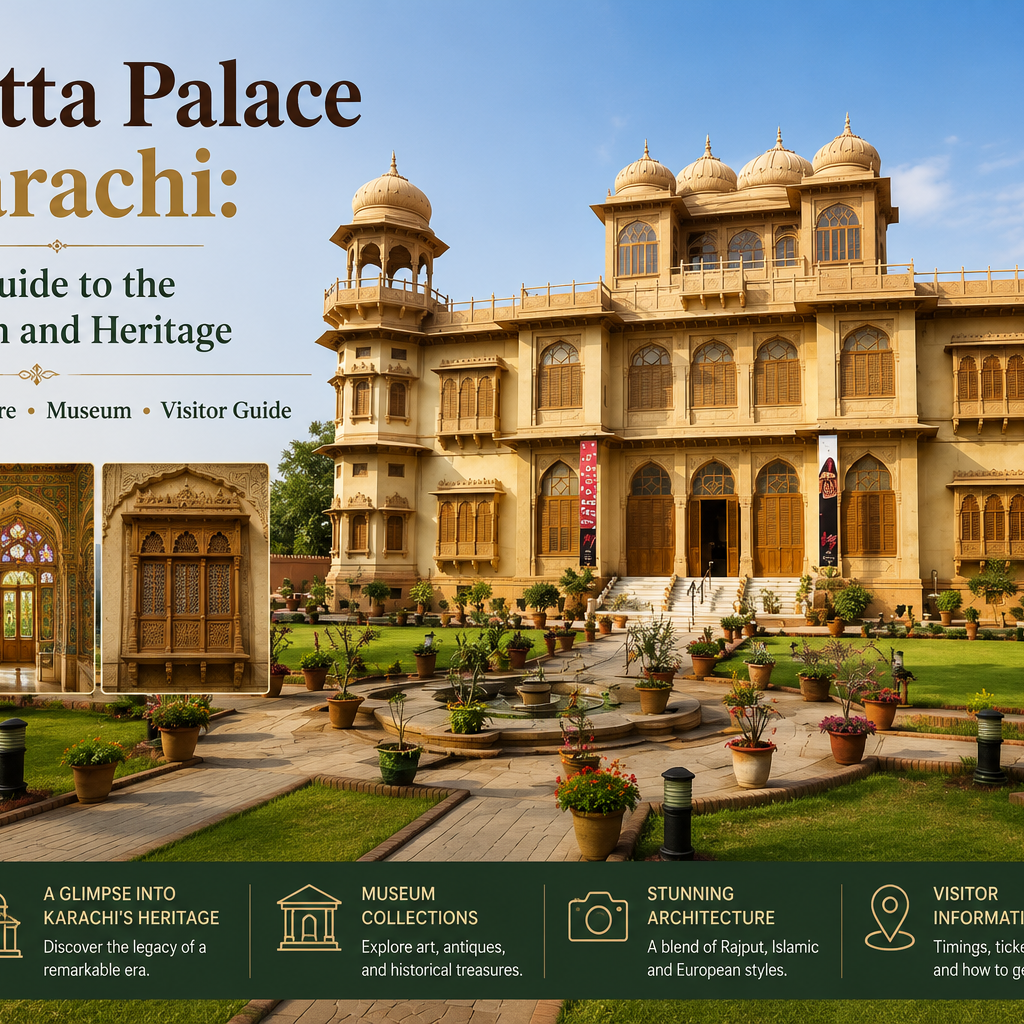
Mohatta Palace is celebrated for its striking architecture. It was designed by Ahmed Hussain Agha who was one of the first Muslim architects of the subcontinent and had come from Jaipur to work in Karachi. He designed the palace in the Mughal revival style, seeking to recreate the Anglo Mughal palaces of the Rajput princes of Rajasthan. This ambitious design proved the crowning work of his career.
Mohatta Palace is famous for its distinctive stone and colour. It was built with pink Jodhpur stone combined with local yellow Gizri stone, giving the building its warm red and beige hues. The facade is richly decorated with windows, stone brackets, spandrels, balustrades with floral motifs and fine railings. It features nine domes with a central dome surrounded by smaller ones a design that also helped shield the residents from the heat.
Mohatta Palace is elegant inside as well as out. The building covers around 18,500 square feet across a basement a ground floor and a first floor, set in a large garden estate. The ground floor holds large stately rooms once used for entertaining, while the first floor held the private quarters. The basement contains a pool chamber. The blue front windows the stained glass rear windows the teak woodwork and the polished staircases add to its beauty.
Museum today
Mohatta Palace serves today as a leading museum of the arts and heritage of the country. It is run by the Mohatta Palace Gallery Trust which is a charitable trust chaired by the Governor of Sindh and tasked with preserving the building for cultural use. The museum hosts a changing programme of exhibitions, drawing visitors throughout the year. This role has made the palace a beacon of cultural life in the city.
Mohatta Palace holds a rich range of exhibitions and collections. It has hosted acclaimed exhibitions on the arts, crafts and history of the country, from the treasures of the Talpurs to contemporary art, textiles and sculpture. A collection of colonial era bronze statues, once placed at public sites in the city, is displayed in the grounds. The permanent and temporary exhibits tell the story of the culture and history of the country.
Mohatta Palace is also a centre for cultural events and learning. It arranges lectures, seminars, workshops and conferences on history art and architecture, providing a platform for scholars artists and historians. The gardens and the rooftop with their mature trees, offer a tranquil space in the busy city. This blend of exhibitions, events and setting makes a visit rewarding.
Visiting Mohatta Palace
Mohatta Palace is one of the most rewarding heritage sites to visit in Karachi, offering architecture, history and art in one graceful setting. It is open to the public on most days though it is closed on certain days of the week, so it is worth checking the current timings before a visit. There is usually a modest entry fee. Photography inside the palace is often restricted, so it is wise to check the rules on arrival.
Mohatta Palace is reached easily as it is located in the Clifton area, in the southern part of the city. It is accessible by car, taxi, rickshaw and ride hailing service, near the seafront and the other landmarks of Clifton. The palace is best explored on foot allowing time for the exhibitions the architecture and the gardens. The cooler months from around November to March offer the most comfortable time to visit. A visit combines well with the nearby Clifton landmarks.
Places near Mohatta Palace
Mohatta Palace is located within reach of many landmarks and useful places in the Clifton area of Karachi. The Sea View beach the Jehangir Kothari Parade and the shrine of Abdullah Shah Ghazi are nearby in Clifton. The Teen Talwar monument and the Dolmen Mall lie a short distance away.
The central city with the Frere Hall the Empress Market and the Mazar e Quaid, is a short drive away. The Bagh Ibne Qasim park and the Clifton seafront are close by. The upscale commercial streets of Clifton and DHA offer shopping and dining. The Mai Kolachi road and the Clifton Bridge connect the area to central Karachi.
Frequently asked questions
Where is Mohatta Palace located? Mohatta Palace is located in the Clifton area of Karachi, near the seafront, in the southern part of the city. It is close to the Sea View beach the Jehangir Kothari Parade and the Teen Talwar monument. It is easily reached by car, taxi, rickshaw and ride hailing service.
Who built Mohatta Palace and when? Mohatta Palace was built in 1927 as a summer home in Clifton by Shivratan Mohatta who was a wealthy Hindu Marwari businessman. It was designed by the architect Ahmed Hussain Agha in the Mughal revival style. It is said Mohatta built it for his ailing wife, on the advice that the sea breeze might help her health.
Why is Mohatta Palace also called Qasr e Fatima? Mohatta Palace is officially known as Qasr e Fatima in government records, in memory of Fatima Jinnah who was the sister of the founder of the country and lived there in the 1960s. The palace became the hub of her presidential campaign. It is still widely known to residents as Mohatta Palace.
What is the architecture of Mohatta Palace like? Mohatta Palace is built in the Indo Saracenic and Mughal revival style with pink Jodhpur stone and local yellow Gizri stone. It features nine domes with a central dome surrounded by smaller ones along with decorated windows, spandrels, balustrades and fine railings. It is often called the Taj Mahal of Karachi.
Is Mohatta Palace open to the public? Yes. Mohatta Palace serves today as a museum of the arts and heritage of the country, open to the public on most days though closed on certain days of the week. There is usually a modest entry fee. Photography inside is often restricted, so it is worth checking the current rules and timings before a visit.
What can you see at the Mohatta Palace Museum? The Mohatta Palace Museum hosts exhibitions on the arts, crafts and history of the country, from historical treasures to contemporary art, textiles and sculpture. A collection of colonial era bronze statues is displayed in the grounds. The graceful architecture the stained glass windows and the gardens are highlights in themselves.
Mohatta Palace is one of the most beautiful heritage buildings of Karachi and a graceful link to the past of the city. Built in 1927 as a seaside home in Clifton and designed by the architect Ahmed Hussain Agha it has passed through many chapters, from the home of a businessman to a government office the residence of Fatima Jinnah and, today a museum of the arts. Its pink and yellow stone facade its nine domes and its fine detailing make Mohatta Palace a treasure of the architecture of the city.
Mohatta Palace brings together heritage architecture and art in one elegant setting. Often called the Taj Mahal of Karachi it carries the story of the city through its layered history, while its exhibitions, cultural events and tranquil gardens make it a living institution. Set in the Clifton area near the seafront and the other landmarks of the city it is easy to reach and to combine with a wider day out. It remains one of the most cherished heritage sites in Karachi and a proud symbol of the cultural life of the city whether you visit Mohatta Palace for its architecture its history its art or simply its peaceful gardens.