The Lahore Canal: A Guide to the Green Heart of the City
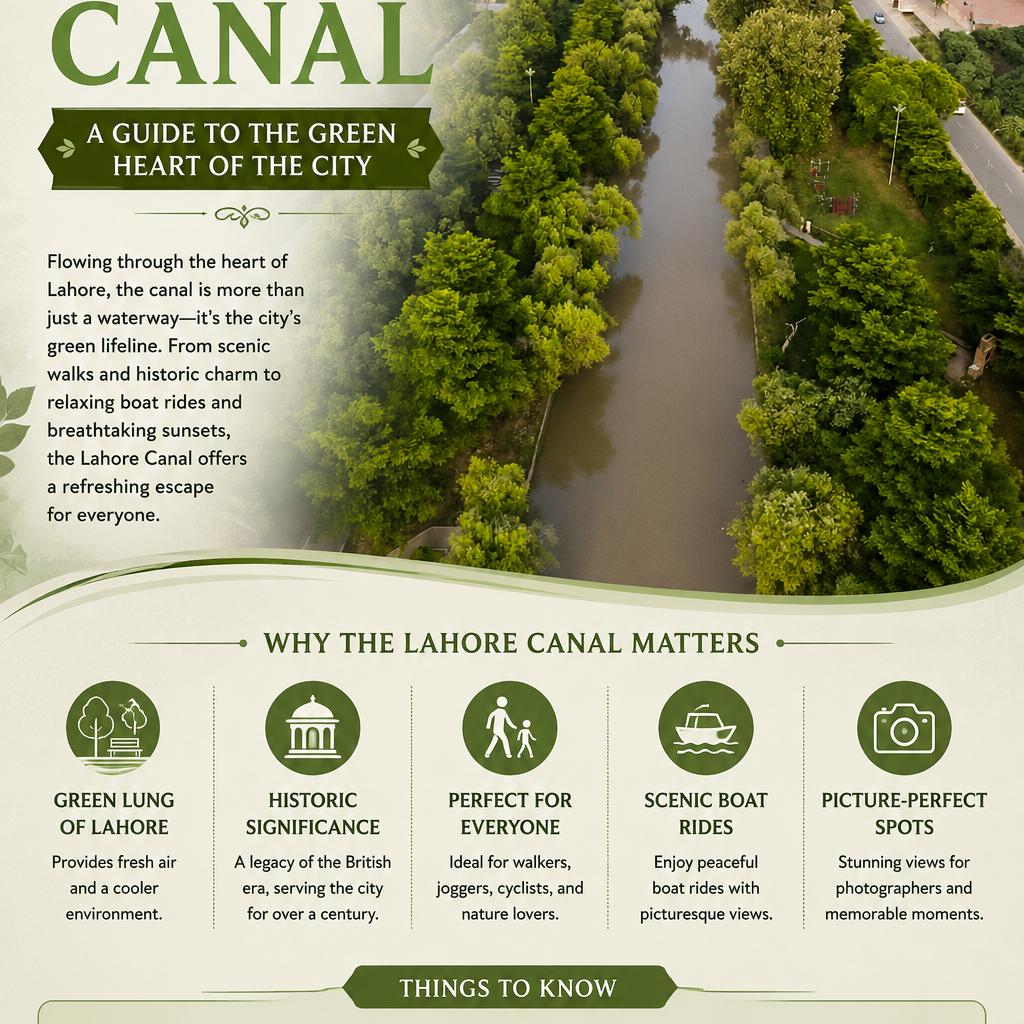
The Lahore Canal is one of the most loved and defining features of Lahore. It is a long waterway that runs through the city from the east to the south west, bordered by tree lined green belts. The Lahore Canal is known for its linear park, its Canal Bank Road, its summer swimmers and its dazzling festival illuminations. It began as a Mughal canal and was upgraded by the British in 1861. For anyone getting to know Lahore, the Lahore Canal is a green artery that carries the daily life, the culture and the festivals of the city along its banks.
This guide explains what the Lahore Canal is, its history, its role in the culture of the city and how to enjoy it.
Lahore Canal
The Lahore Canal is a long irrigation canal that runs through the eastern and southern parts of Lahore, also known simply as the Nahr. It is a branch of the larger Bambawali Ravi Bedian Canal, known as the BRB Canal. It runs for around 37 miles, about 60 kilometres, through and around the city. It is bordered on both sides by roads known as the Canal Bank Road, a feature that makes it a central artery of the city.
The Lahore Canal forms the heart of a unique linear park. The green belt along the canal is one of the longest public green belts in the area, lined with trees, grass and gardens that offer a rare stretch of green through the busy city. The canal also divides the older neighbourhoods on one side from the newer, more affluent areas on the other, flowing past posh colonies, famous colleges, student hostels and cricket grounds. It serves as a main artery for traffic flowing between the Ferozepur road, Jail road, Mall road and Multan road. This role makes it a defining link of Lahore.
Quick answer: The Lahore Canal is a long irrigation canal, around 37 miles or 60 kilometres long, that runs through Lahore. A branch of the Bambawali Ravi Bedian Canal, it began under the Mughals and was upgraded by the British in 1861. It forms the centre of a long green belt, bordered by the Canal Bank Road. It is a popular spot for recreation and festival celebrations.
From the Shah Nahr to the modern canal
The history of the Lahore Canal reaches back to the Mughal era. The waterway was initially built by the Mughals for irrigation, said to have origins in a canal known as the Shah Nahr, meaning the Royal Canal, that supplied water to the Mughal gardens. This Mughal origin gives the Lahore Canal a history of many centuries.
The Lahore Canal was greatly upgraded by the British. After annexing the Punjab in 1849, the British built a series of canals to open up fertile land and guard against famine. They upgraded and extended this canal in 1861, turning it into the substantial waterway that runs through the city today. It is part of the wider Bambawali Ravi Bedian Canal, also known as the Ichhogil Canal. This runs along the eastern edge of the city and has a place in the military history of the country, tied to the 1965 war. The canal was widened during the era of Ayub Khan in the 1960s, when roads were built along its banks and the Canal Bank Road became a key route across the city.
Green belt and its route
The Lahore Canal is famous for the green belt that runs along its length, one of the longest public green belts in the area. The trees, lawns and gardens along the banks offer a rare stretch of green through the busy city. The canal enters from the BRB Canal near the eastern edge, close to the Jallo area, runs through the heart of the city past the universities and colonies. After crossing the Thokar Niaz Baig it turns and runs parallel to the Raiwind Road towards the south.
The Lahore Canal is crossed by many roads and bridges. The Canal Bank Road runs along both banks, offering a scenic drive through the green belt. Bridges and flyovers, such as the Muslim Town Flyover, cross the canal at many points with the Metro Bus crossing on a flyover. It flows past the University of the Punjab, the Canal side colonies and areas such as Garden Town, Gulberg, Model Town and the Cantonment, linking the eastern edge with the southern Raiwind corridor.
Canal at the heart of city life
The Lahore Canal holds a special place in the culture and daily life of the city, far more than an irrigation channel. During the hot summer months, its sight is a relief to residents. Hundreds of people come to swim and cool off in the canal, especially the young. Families gather on the banks in the evenings, sitting by the water and eating watermelon. Swimming in the canal carries real risks, however, as the water is not always clean, so caution is advised.
The Lahore Canal comes alive during festivals. On local, national and religious festivals, the canal is illuminated with lights and decorated with displays laid out in the water. Festivals such as the Jashn e Baharan, the welcoming of spring, along with Basant, Eid, the Independence Day and the Pakistan Day, bring the canal to life with models of famous landmarks and colourful displays floating on the water. Generations of residents have learned to swim in its waters and gathered on its banks. The Canal Bank Road has long been a favourite drive, so the canal is tied to the memory and identity of the city.
Enjoying the Lahore Canal
The Lahore Canal is one of the most pleasant features to enjoy in Lahore, offering a green drive, a place to walk and a front row seat to the festivals of the city. It is best experienced along the Canal Bank Road, where a drive offers a scenic route through the green belt, shaded by trees. The green belt has spots for walking and sitting, especially in the cooler parts of the day. The stretch near the universities and colonies is especially pleasant.
The Lahore Canal is at its most spectacular during the festival season. The illuminations during the Jashn e Baharan, the Independence Day and other festivals are a highlight of the year, drawing crowds to see the lights and the displays on the water. The cooler evenings are the best time to enjoy them. The Canal Bank Road is accessible by car, taxi, rickshaw, ride hailing service and the Metro Bus. The cooler months from around October to March offer the most comfortable time to enjoy the banks. Visitors should take care near the water, since swimming carries risks. They should also keep the green belt clean.
Places near the Lahore Canal
The Lahore Canal runs past many landmarks and useful places across Lahore. The University of the Punjab new campus is located along the canal. Garden Town, Gulberg and Model Town lie near its banks. The Jallo Park and the Jallo area lie near the eastern end of the canal.
The Thokar Niaz Baig interchange is located where the canal turns towards the Raiwind Road. Johar Town, Wapda Town and the Raiwind Road societies lie along the southern stretch. The Metro Bus and the main highways cross the canal at many points. The central city and the Mall Road are within reach.
Frequently asked questions
What is the Lahore Canal? The Lahore Canal is a long irrigation canal, around 37 miles or 60 kilometres long, that runs through the eastern and southern parts of Lahore. It is a branch of the Bambawali Ravi Bedian Canal and forms the centre of a long green belt bordered by the Canal Bank Road.
Who built the Lahore Canal? The Lahore Canal was initially built by the Mughals for irrigation with origins linked to a canal known as the Shah Nahr, meaning the Royal Canal. The British upgraded and extended it in 1861 after annexing the Punjab, turning it into the modern waterway that runs through the city.
Why is the Lahore Canal important to the city? The Lahore Canal forms one of the longest public green belts in the area and is a popular recreational destination. It is a summer refuge for swimmers, a place for families to gather and the site of dazzling festival illuminations. It also serves as a chief artery for traffic across the city.
Can you swim in the Lahore Canal? Hundreds of people come to swim in the Lahore Canal during the hot summer months, especially the young. However, swimming in the canal carries real risks. The water is not always clean. Swimming is often discouraged for safety reasons, so caution is strongly advised.
When is the Lahore Canal illuminated? The Lahore Canal is illuminated with lights and decorated with displays during local, national and religious festivals. These include the Jashn e Baharan, the welcoming of spring, along with Basant, Eid, the Independence Day and the Pakistan Day. The illuminations draw crowds from across the city.
What is the Canal Bank Road? The Canal Bank Road is the name for the roads that run along both banks of the Lahore Canal. It offers a scenic drive through the green belt, shaded by trees. It serves as a key route across the city. It passes many universities, colonies and housing areas along the canal.
The Lahore Canal is one of the most loved and defining features of Lahore and a green artery at the heart of the city. Beginning as a Mughal canal and upgraded by the British in 1861, it runs for around 60 kilometres through and around the city as a branch of the Bambawali Ravi Bedian Canal. Its long green belt, its tree lined Canal Bank Road and its central route make the Lahore Canal a rare stretch of green through the busy city.
The Lahore Canal is woven into the seasons, the festivals and the daily life of the city. In summer it becomes a refuge for swimmers and families seeking relief from the heat, while during festivals such as the Jashn e Baharan and the Independence Day its banks blaze with lights and displays. Its green belt offers a scenic drive and a place to walk, linking the universities, colonies and housing areas along its length. Dividing the old city from the new and connecting the eastern edge with the southern corridor, the Lahore Canal carries the culture, the memory and the daily rhythm of the city along its banks. It remains one of the most cherished features of the city whether you drive along the Canal Bank Road, gather for the festival illuminations or simply enjoy the green belt.