Home Financing and Mortgages in Pakistan: A Complete Guide
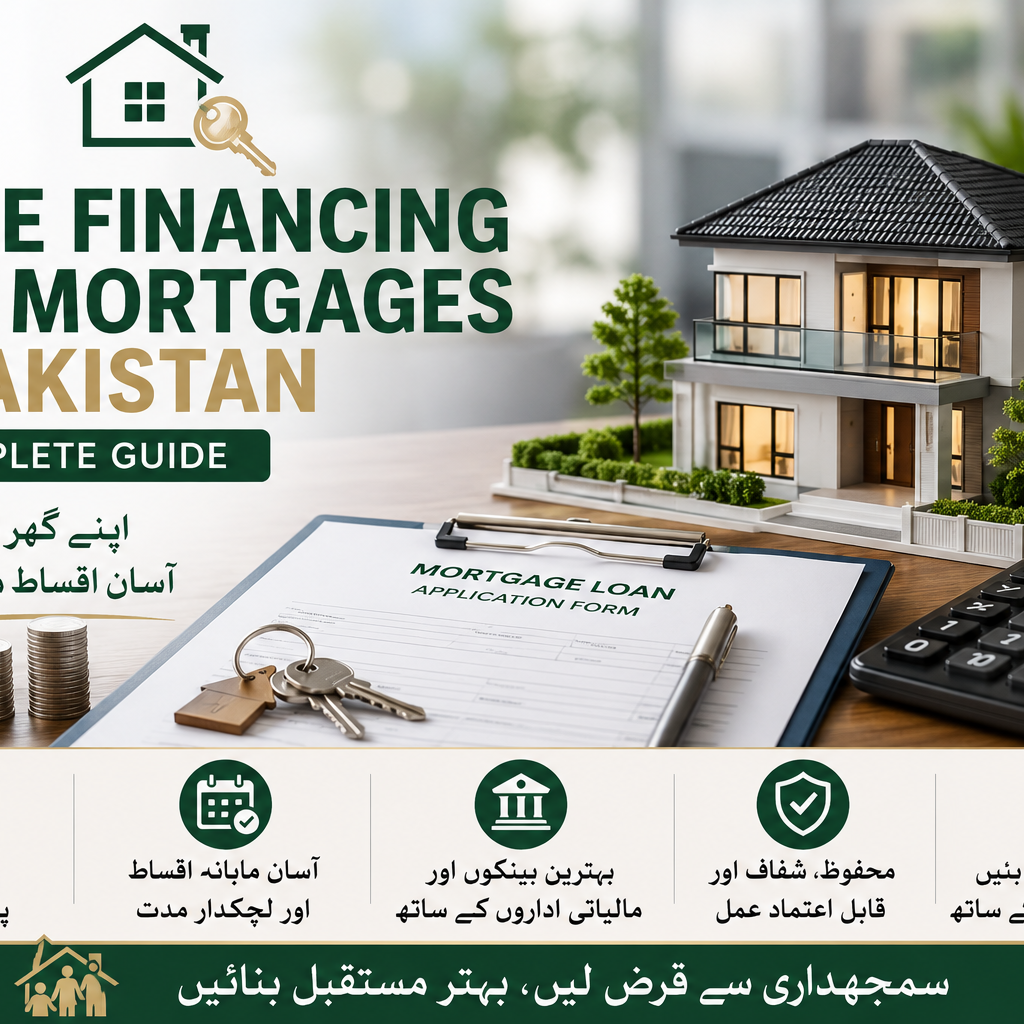
Buying a home outright is beyond the reach of many families. Home financing offers a way to own a home by paying over the years instead. From conventional mortgages to Islamic financing and government backed schemes there are more ways than ever to finance a home in Pakistan. This guide covers how home financing and mortgages work the main options, who qualifies and how to choose wisely so you can take this big step with confidence.
This guide offers general information and is not financial advice. Rates, schemes and terms change over time so it is always wise to check the current details with the bank and consider professional advice.
Quick answer: Home financing in Pakistan provides you with an opportunity to purchase/build/renovate your house through monthly installment payments over a lengthy period of twenty or twenty-five years. The different types of home financing available include conventional mortgages, Islamic mortgages which use the system of partnerships like Diminishing Musharaka, as well as government mortgage plans for first-time buyers. The banks will provide you with financing of the property amounting to a major portion of the value of the property along with a down payment from your side.
How home financing works
Home financing spreads out the payment over many years. Home financing or Mortgage helps you own a house by allowing you to purchase the house and pay back the money over time through monthly payments instead of making a full payment in one lump sum. It makes it easy for many people to own their homes.
The bank finances a share of the value. The bank usually finances a large part of the value of the property while you pay the rest as a down payment. The share the bank will finance and the size of the down payment depend on the product and the lender. This balance is known as the loan to value ratio.
Conventional mortgages
Conventional mortgages charge interest. A conventional mortgage is a loan from a bank to buy, build or renovate a home, repaid with interest over the agreed term. The interest rate may be fixed or variable, often linked to the market rate. This is the traditional form of home financing.
The terms suit long term repayment. Conventional mortgages usually run over a long term, often up to twenty or twenty five years. This keeps the monthly installments manageable. A longer term means smaller payments but more interest over time. The right term depends on your income and your plans.
Islamic home financing
Islamic financing avoids interest. Islamic home financing offers a way to own a home without paying interest an approach many prefer for religious reasons. Instead of lending money at interest the bank partners with you to buy the home. This makes it a popular choice across the country.
Diminishing Musharakah is the common model. Under the Diminishing Musharakah model the bank and the buyer own the property together then the buyer gradually buys out the share of the bank while paying rent on the portion still owned by the bank. Over time, you come to own the whole home. Meezan Bank and other Islamic banks offer this kind of financing.
Government backed schemes
Government schemes help first time buyers. The government has offered schemes to make home ownership easier for low and middle income families, such as the Mera Ghar Mera Ashiana scheme, supported by the State Bank of Pakistan. These schemes offer low markup rates and long repayment periods. They are aimed at first time buyers.
The schemes offer real benefits. Such schemes typically offer a subsidised markup a high share of the value financed and a long repayment term, making the monthly installments far more manageable. Many Islamic banks offer a Shariah compliant option under these schemes. The exact terms and limits change over time so it is wise to check the current details.
Guard against unapproved agents. It is important that you apply through an official bank and guard against unapproved websites or agents purporting to help you process your application on behalf of the government. This will protect you from fraud.
Eligibility and the process
Eligibility depends on your income and documents. To qualify for home financing, you generally need a stable, verifiable income, whether you are salaried, self employed or a business owner along with a good repayment capacity. Your income and credit history shape both the approval and the amount. Some schemes allow co applicants to combine their income.
Prepare the required documents. The usual documents include your identity card, proof of income such as salary slips or business proof, bank statements, photographs and the property papers. First time buyer schemes may also ask for an affidavit that you do not already own a home. Having these ready speeds up the process.
Follow the steps to apply. The process usually involves choosing a product, submitting your application and documents to the bank, having the property and your income assessed then receiving the sanctioned financing. It is wise to get the full payment schedule in writing and to check the total payable and the early settlement terms before you commit.
Frequently asked questions
What is the difference between a conventional mortgage and Islamic home financing? A conventional mortgage is a loan repaid with interest over the agreed term with the rate either fixed or variable. Islamic home financing avoids interest an approach many prefer for religious reasons. Under the common Diminishing Musharakah model the bank and the buyer own the property together then the buyer gradually buys out the share of the bank while paying rent on the portion still owned by the bank. Both let you own a home over time.
How much down payment do I need for a home loan in Pakistan? The down payment depends on the loan to value ratio of the product and the lender. It is the share of the property value you pay yourself while the bank finances the rest. Government backed schemes for first time buyers often finance a high share of the value, leaving a smaller down payment for the buyer. It is best to confirm the exact figures with the bank as these vary by product and change over time.
Who is eligible for home financing in Pakistan? In order to qualify for a home loan, there is usually the need for a steady and verifiable source of income regardless of whether one is employed or self-employed or runs a business besides having the ability to repay the loan. Income and credit standing determine your eligibility as well as how much you can get. The conditions of the government programs for new buyers tend to be less stringent and often call for no prior ownership of a home.
What is the Mera Ghar Mera Ashiana scheme? The Mera Ghar Mera Ashiana scheme is a government backed housing finance program, supported by the State Bank of Pakistan, designed to help low and middle income families buy, build or renovate their first home. It offers a subsidised markup rate a long repayment term and financing of a high share of the value, making the installments more manageable. It is offered through participating commercial and Islamic banks. The terms are revised from time to time.
Can overseas Pakistanis get home financing? Yes, overseas Pakistanis can access home financing in Pakistan, often through products linked to the Roshan Digital Account and schemes aimed at non residents. These allow financing of a share of the property value with the documents signed digitally. This is covered in more detail in the guide for overseas Pakistanis buying property. As with any financing it is wise to confirm the current terms with the bank.
Financing your home
Home financing has made it possible for many families to own a home in Pakistan without paying the full price at once. Whether you choose a conventional mortgage, Islamic financing based on a partnership model or a government backed scheme for first time buyers there is an option to suit many budgets and beliefs. The bank finances a share of the value while you repay in manageable installments over the years.
Before you commit, take the time to compare the options and understand the terms. Check the markup or the profit rate the down payment the repayment term and the total payable then get the full schedule in writing. Apply through a genuine bank, prepare your documents and be wary of unofficial agents. With careful research and a clear plan, home financing can turn the dream of owning a home into a reality that fits your income and your future.