History of Karachi: A Complete Guide
The history of Karachi is the story of a humble fishing village that grew into one of the great cities of the world. From its beginnings as the settlement of Kolachi on the Arabian Sea to its rise as a British port the capital of a new nation and a megacity of many millions the city has been shaped by trade, conquest and migration. The history of Karachi is a rich tale of the sea the empire and the people who made it home. It lives on in the old buildings the bazaars and the spirit of the city today. If you would like to learn more about the history of Karachi, this guide will take you through its journey from a small fishing town to a metropolis.
The history of Karachi from the period when it was Kolachi to its time as a British colony and then partition is covered in this guide.
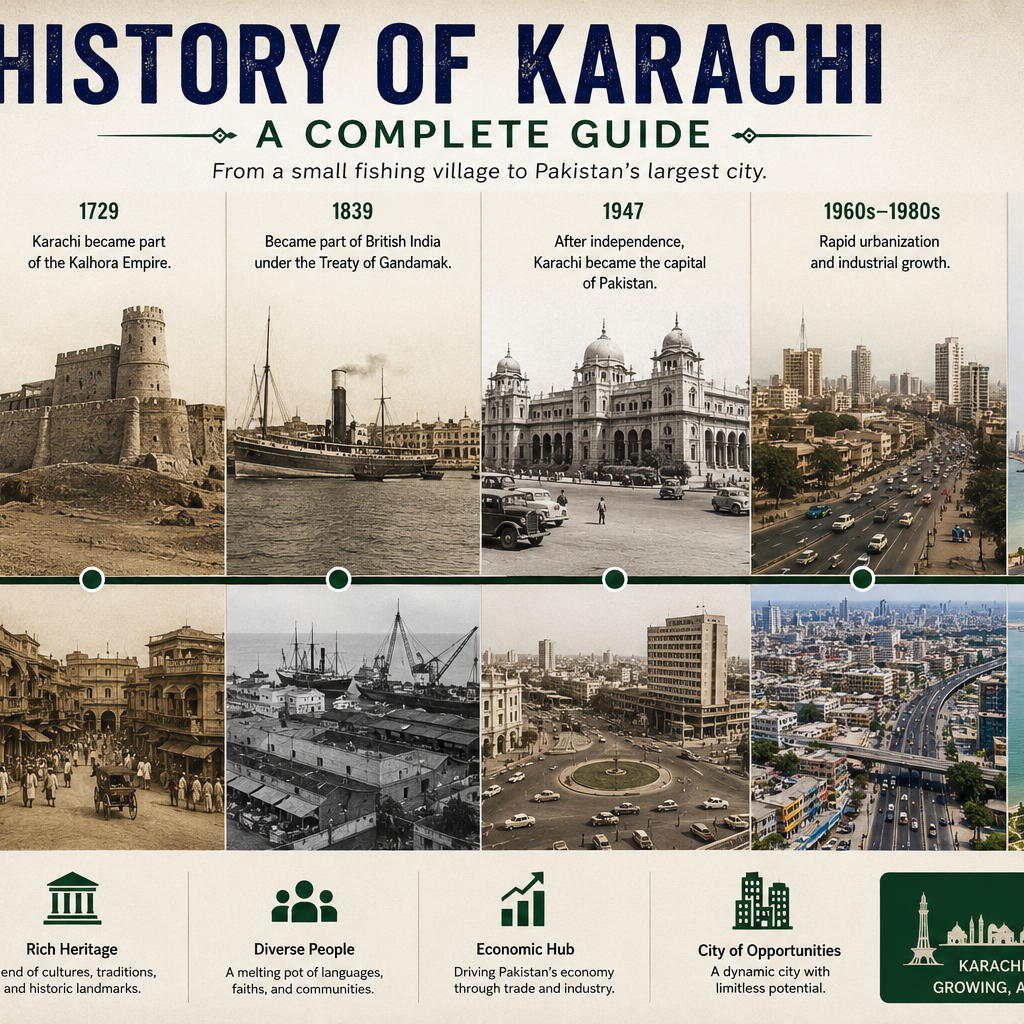
Quick answer: Karachi began as a small fishing village called Kolachi, named after Mai Kolachi a fisherwoman of legend. By the late 18th century it had grown into a trading post with a small fort, dealing with Muscat and the Persian Gulf. The British took it over in 1839 and turned it into a major port with railways, trams and grand colonial buildings. In 1947 it became the first capital of the new country, drawing waves of migrants, before growing into the megacity of today.
From a fishing village named Kolachi
Karachi began as a humble fishing settlement. The city started life as a small fishing village on the Arabian Sea, named Kolachi after Mai Kolachi a fisherwoman of local legend who settled here and started a family. This humble origin is the root of the great city.
The village grew as Kolachi jo Goth. The settlement that grew from this beginning was known as Kolachi jo Goth, meaning the village of Kolachi, home to a small community of fisherfolk. This name is remembered in the city today. The Mai Kolachi area still carries the name of its founder.
The area has ancient echoes too. Some believe the coast was the ancient harbour of Krokola from which an admiral of Alexander the Great once sailed while the nearby Debal was captured by Muhammad Bin Qasim in the 8th century. These ancient links add depth to the story of the city. They remain a matter of legend and debate.
Trading post and the little fort
Kolachi grew into a trading post. By the late 18th century the fishing village had become a small port, trading across the Arabian Sea with Muscat and the Persian Gulf. This trade was the first step towards the great port of today.
A small fort protected the growing port. The people of the town built a small fort armed with cannons from Muscat with two gateways to the settlement. This fort marked the growing importance of the place. It guarded the town and its trade.
The two gates live on in the city. One gate faced the sea and was known as Kharadar the Brackish Gate while the other faced the Lyari river and was known as Meethadar the Sweet Gate. These names survive as localities of the old city today. They are a living link to the earliest days of the city.
British transformation
The British took over Karachi in 1839. The British East India Company took control of the town in 1839, drawn by its fine natural harbour and its position on the trade routes. This takeover began a complete transformation of the town.
The town became the capital of Sindh. After the conquest of Sindh by Charles Napier in 1843, Karachi grew in importance and became the capital of the province. This new role set the town on the path to greatness. It marked the start of rapid growth.
The British built a modern port city. Under British rule the town gained a developed harbour a railway link to the rest of British India, paved streets and, in 1900 the first tramway in South Asia along with grand colonial buildings such as the Empress Market. This building boom shaped the face of the old city. Many of these grand buildings still grace the city today.
Partition and the capital of a new nation
Karachi became the first capital of the new country. When the country was created in 1947, Karachi was chosen as its first capital, thanks to its port its infrastructure and its cosmopolitan character. This role placed the city at the heart of a new nation. It became a symbol of the hopes of the new country.
The partition brought waves of migrants. The creation of the new country brought a great influx of migrants above all Urdu speaking Muslims from across the border, who settled in the city in vast numbers. This migration transformed the city forever. It reshaped its population its culture and its food.
The city became a melting pot. The new arrivals joined the existing communities to make the city a melting pot of peoples, languages and traditions from across the region. This diversity became a defining feature of the city. It remains one of the great strengths of the city.
Growth into a megacity
Karachi grew into the economic heart of the country. In the decades after independence the city became the commercial and industrial centre of the country, home to its stock exchange its banks and its factories. This growth made it the economic engine of the country. It drew workers from every region in search of opportunity.
The city expanded at a rapid pace. Through the later 20th century the city grew rapidly with new industries, new neighbourhoods and a soaring population, spreading far beyond its old centre. This rapid growth turned the city into a sprawling metropolis. It became the largest city in the country by far.
The growth was accompanied by its own set of problems, in addition to opportunities. With the fast development of the city, pressure began to be exerted on its infrastructure and services, and the problems of housing, transportation, and security followed along with its success. This is part of the modern history of the city.
Legacy of history today
The history of the city lives on in its buildings. The grand colonial buildings the old bazaars and the historic gates of Kharadar and Meethadar carry the long story of the city into the present. These heritage sites are covered in their own dedicated guides. They are a living museum of the past of the city.
The history shapes the character of the city. The trade the migration and the diversity of its past have made the city the welcoming, enterprising and diverse place it is today. This inheritance is felt in every part of the city. It is the foundation of its character.
The story of the city continues. From a fishing village to a megacity of many millions the city keeps growing and changing, writing the next chapters of a long and remarkable story. This living history is a source of pride. It makes the city a place of endless fascination.
Frequently asked questions
How did Karachi get its name? Karachi takes its name from Kolachi the small fishing village from which it grew. By legend the village was named after Mai Kolachi a fisherwoman who settled on the coast and started a family. The settlement was known as Kolachi jo Goth, meaning the village of Kolachi a name still remembered in the Mai Kolachi area of the city today.
When was Karachi founded? Karachi began as a fishing village on the Arabian Sea with its origins often traced to the early 18th century. By the late 1700s it had grown into a small trading port dealing with Muscat and the Persian Gulf. The British took it over in 1839 and developed it into a major port city. Its modern growth dates from that era onwards.
When did the British take over Karachi? The British East India Company took control of Karachi in 1839, drawn by its fine natural harbour and its position on the trade routes. After the conquest of Sindh by Charles Napier in 1843, Karachi became the capital of the province. Under British rule the town was transformed into a modern port city with railways, trams and grand colonial buildings.
Was Karachi the capital of Pakistan? Yes, Karachi was the first capital of the country when it was created in 1947, chosen for its port its infrastructure and its cosmopolitan character. The capital was later moved, first to Rawalpindi and then to the purpose built city of Islamabad, though Karachi has remained the capital of the province of Sindh and the largest city and economic centre of the country.
How did Partition change Karachi? The partition of 1947 transformed Karachi. As the first capital of the new country it drew a great influx of migrants above all Urdu speaking Muslims from across the border, who settled in the city in vast numbers. This migration reshaped the population the culture and the food of the city, turning it into the diverse melting pot it remains today.
Why did Karachi grow so quickly? Karachi grew quickly because of its fine natural harbour its position on the trade routes and its role as a port and commercial centre. Under the British it became a major port with railways and trams. After independence it became the economic heart of the country, home to its stock exchange, banks and industries, drawing workers from every region and growing into a megacity of many millions.
Story of Karachi
The history of Karachi is the remarkable story of a fishing village that grew into one of the great cities of the world. From the settlement of Kolachi and its little fort on the Arabian Sea to the grand port of the British the first capital of a new nation and the sprawling megacity of today the city has been shaped by the sea, by trade, by conquest and by the waves of people who made it home. Its long history lives on in its old buildings its bazaars and the diverse, enterprising spirit of its people.
The story of Karachi is above all a story of the people who built it. From Mai Kolachi and the fisherfolk of Kolachi jo Goth to the British engineers the migrants of the partition and the millions who call it home today, each generation has added a chapter to the tale. The gates of Kharadar and Meethadar the grand colonial buildings and the great bazaars still carry that history into the present. Karachi remains a place of endless history and fascination, still writing the next chapters of its remarkable story from a humble village to a megacity.