Frere Hall Karachi: A Guide to the Colonial Landmark
Frere Hall is one of the most iconic colonial era landmarks of Karachi. It is located in the Civil Lines area of the central Saddar Town, surrounded by the gardens of Bagh e Jinnah. Frere Hall is known for its Venetian Gothic architecture its Liaquat National Library and the ceiling murals of the artist Sadequain. It was completed in 1865 as the town hall of the city and now serves as a library and exhibition space. For anyone getting to know Karachi, Frere Hall offers the colonial heritage, the architecture and the culture of the city in one graceful building set in green lawns.
This guide explains what Frere Hall is its history its architecture its library and how to visit.
Frere Hall
Frere Hall is a historic colonial era building located in the Civil Lines neighbour hood of the central Saddar Town in Karachi. It is located between the Abdullah Haroon Road and the Fatima Jinnah Road, next to the colonial era Sind Club. Completed in 1865 it was originally intended to serve as the town hall of the city. It now serves as a library an art gallery and an exhibition space. It is one of the most important heritage landmarks of the city.
Frere Hall is named after a British administrator. It takes its name from Sir Henry Bartle Edward Frere a British commissioner of Sindh who was known for promoting the economic development of the province and for making Sindhi the language of administration. The building was renamed in his honour after his death in 1884. This colonial origin gives Frere Hall its place in the history of the city.
Frere Hall is set in the green lawns of Bagh e Jinnah. The gardens surrounding the hall spread over around 15 acres. They were originally known as the Queen and King Lawns and were renamed Bagh e Jinnah after independence a name meaning the Jinnah Gardens. The hall and its gardens together form a rare green retreat in the heart of the busy city, popular with families, students and visitors.
Quick answer: Frere Hall is a historic colonial era building located in the Civil Lines area of central Karachi, surrounded by the gardens of Bagh e Jinnah. Completed in 1865 as the town hall of the city it is known for its Venetian Gothic architecture its Liaquat National Library and the ceiling murals of the artist Sadequain. It now serves as a library and exhibition space.
History of Frere Hall
The history of Frere Hall begins in the early British colonial era. Construction commenced in August 1863 and was completed in October 1865, making it one of the largest and earliest such buildings in the province. The land was purchased with funds donated by prominent figures of the time. The design was chosen from among a dozen candidates. The building opened as the town hall of the city, the centre of its social and cultural life.
Frere Hall has served many roles over the years. It was the main city hall in the days of British rule and later housed the National Museum of Pakistan until the early 1970s, when the museum moved to a nearby site. After independence its library was renamed the Liaquat National Library, in honour of the first prime minister of the country. This changing use reflects the evolving story of the city.
Frere Hall has weathered periods of difficulty. The hall was closed periodically between 2002 and 2011, owing to security concerns near the former US consulate. It reopened permanently in 2011 after the consulate moved to a site further away. It was declared a protected heritage site in 1985. It is now directly administered by the Karachi Municipal Corporation and hosts several festivals and cultural events.
Architecture of Frere Hall
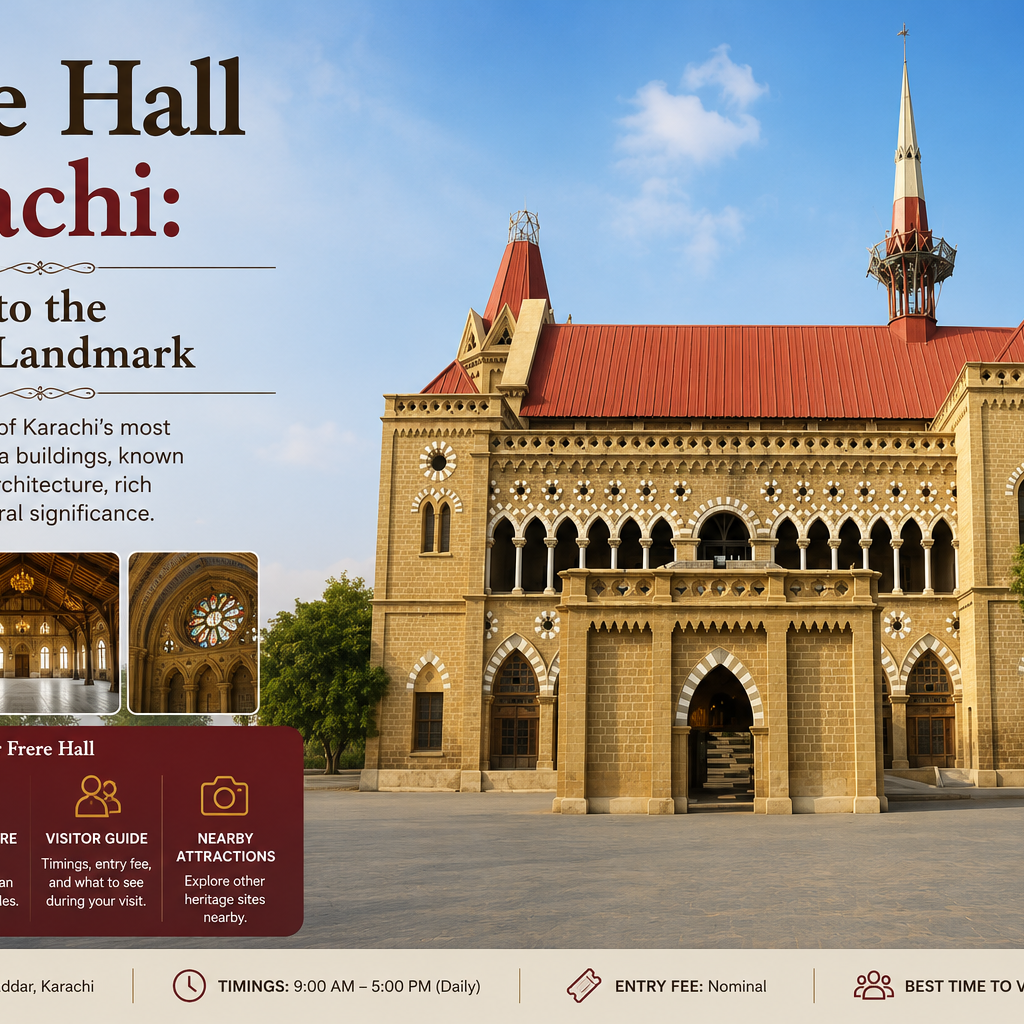
Frere Hall is celebrated for its distinctive architecture. It was designed by Henry Saint Clair Wilkins in the Venetian Gothic style that also blends British and local elements a design chosen from among a dozen candidates. It was the first structure in the province built in this Indo Gothic style a hallmark of colonial architecture. This graceful, ornate design gives the building its striking presence.
Frere Hall is rich in architectural detail. The building features multiple pointed arches, ribbed vaults, quatrefoils and flying buttresses along with intricate carvings and mosaic designs on its walls and pillars. A tall octagonal tower rises at one corner. The Gothic design allows for a well ventilated interior with plenty of natural light, suited to the climate of the city.
Frere Hall was built from local and regional stone. It is constructed primarily of local yellow toned limestone with details in white oolite stone quarried from the nearby town of Bholari along with red and grey sandstone from the Jungshahi area. This combination of stone gives the building its warm colouring and durability. The stonework almost two centuries old, links the present of the city to its colonial past.
Library, the murals and the culture
Frere Hall is home to one of the largest libraries in the city. The Liaquat National Library, on the ground floor, holds a collection of more than 70,000 books, including rare and hand written manuscripts along with old newspapers dating back many decades. It remains a valued resource for scholars, students and the general public, especially those preparing for the civil service examinations.
Frere Hall is famous for the ceiling murals of Sadequain. The world renowned artist decorated the ceilings of the hall in the 1980s. His celebrated work Arz o Samawat was dedicated to the citizens of the city and left incomplete after his death in 1987. Several other works by Sadequain form what is known as the Galerie Sadequain, on the upper floor. These murals bring a touch of modern art to the historic building.
Frere Hall is a lively cultural venue. It hosts art exhibitions, literary events, concerts and community gatherings in its large central hall and its gardens. A popular Sunday book fair draws book lovers and vendors to the grounds. The gardens host festivals and outdoor events. This blend of library art and events makes Frere Hall a living cultural centre.
Visiting Frere Hall
Frere Hall is one of the most rewarding heritage sites to visit in Karachi, offering colonial architecture a historic library, fine murals and green gardens in one place. It is open to the public, generally through the day, though timings can vary, so it is worth checking before a visit. There is usually no entry fee to the grounds. It draws families, students, photographers and history enthusiasts.
Frere Hall is reached easily as it is located in the central Civil Lines area, in the Saddar Town. It is accessible by car, taxi, rickshaw and ride hailing service with nearby parking. The hall and its gardens are best explored on foot allowing time for the architecture, the library, the murals and the lawns. The cooler months from around November to March offer the most comfortable time to visit. The Sunday book fair is a highlight.
Places near Frere Hall
Frere Hall is located within reach of many landmarks and useful places in central Karachi. The Sind Club lies next to the hall. The foreign consulates of the Civil Lines area are nearby. The Empress Market and the Saddar shopping area are a short distance away.
The Mazar e Quaid, the national mausoleum, is a short drive away in the central city. The Mohatta Palace, the Clifton seafront and the Sea View beach lie towards the south. The State Bank Museum and the colonial era buildings of the I.I. Chundrigar Road are within reach. The Karachi Port lies to the west.
Frequently asked questions
Where is Frere Hall located? Frere Hall is located in the Civil Lines area of the central Saddar Town in Karachi, between the Abdullah Haroon Road and the Fatima Jinnah Road. It is surrounded by the gardens of Bagh e Jinnah and lies next to the Sind Club. It is close to the Empress Market and the Saddar shopping area.
Who was Frere Hall named after? Frere Hall is named after Sir Henry Bartle Edward Frere a British commissioner of Sindh known for promoting the economic development of the province and for making Sindhi the language of administration. The building was renamed in his honour after his death in 1884, having opened as the town hall in 1865.
What is Frere Hall used for today? Frere Hall serves today as a library an art gallery and an exhibition space. It houses the Liaquat National Library with over 70,000 books along with the Galerie Sadequain and the murals of the artist Sadequain. It hosts art exhibitions, literary events, concerts and a popular Sunday book fair.
What is the architecture of Frere Hall like? Frere Hall was built in the Venetian Gothic style by blending British and local elements. It features pointed arches, ribbed vaults, quatrefoils, flying buttresses and a tall octagonal tower with intricate carvings and mosaics. It is built of local yellow limestone with white oolite stone and red and grey sandstone details.
Who painted the murals in Frere Hall? The ceiling murals in Frere Hall were painted by the world renowned artist Sadequain in the 1980s. His celebrated work Arz o Samawat adorns the ceiling, left incomplete after his death in 1987. Several other works form the Galerie Sadequain on the upper floor of the hall.
Is Frere Hall open to the public? Yes. Frere Hall is open to the public, generally through the day, though timings can vary, so it is worth checking before a visit. There is usually no entry fee to the grounds. The Sunday book fair is a highlight. The gardens of Bagh e Jinnah draw families and students.
Frere Hall is one of the most iconic colonial era landmarks of Karachi and a graceful link to the past of the city. Completed in 1865 as the town hall and named after the British commissioner Sir Henry Bartle Edward Frere it has served as a museum a library and a cultural venue through the changing story of the city. Its Venetian Gothic architecture its historic library and the ceiling murals of Sadequain make Frere Hall a treasure of the heritage of the city.
Frere Hall brings together colonial history, fine architecture, learning and art in one building set in green lawns. Its Liaquat National Library serves scholars and students its Galerie Sadequain brings modern art to the historic halls. Its gardens of Bagh e Jinnah offer a rare green retreat with a popular Sunday book fair. Set in the central Civil Lines area near the Empress Market and the other landmarks of the city it is easy to reach and to combine with a wider day out. Whether you visit Frere Hall for its architecture its library its murals or its peaceful gardens it remains one of the most cherished colonial era landmarks in Karachi.