Flagstaff House Karachi: A Guide to the Quaid e Azam House Museum
Flagstaff House is one of the most cherished heritage sites of Karachi. It is located in the Cantonment area of the central city, near the junction of the Shahrah e Faisal and the Fatima Jinnah Road. Flagstaff House which is now the Quaid e Azam House Museum was the residence of Muhammad Ali Jinnah, the founder of the country. His sister Fatima Jinnah later lived here too. It is a graceful colonial era yellow stone bungalow, preserved with the personal belongings of the founder. For anyone getting to know Karachi, Flagstaff House offers a close and personal window into the life of the Quaid in one elegant house.
This guide explains what Flagstaff House is its history, the museum and how to visit.
Flagstaff House
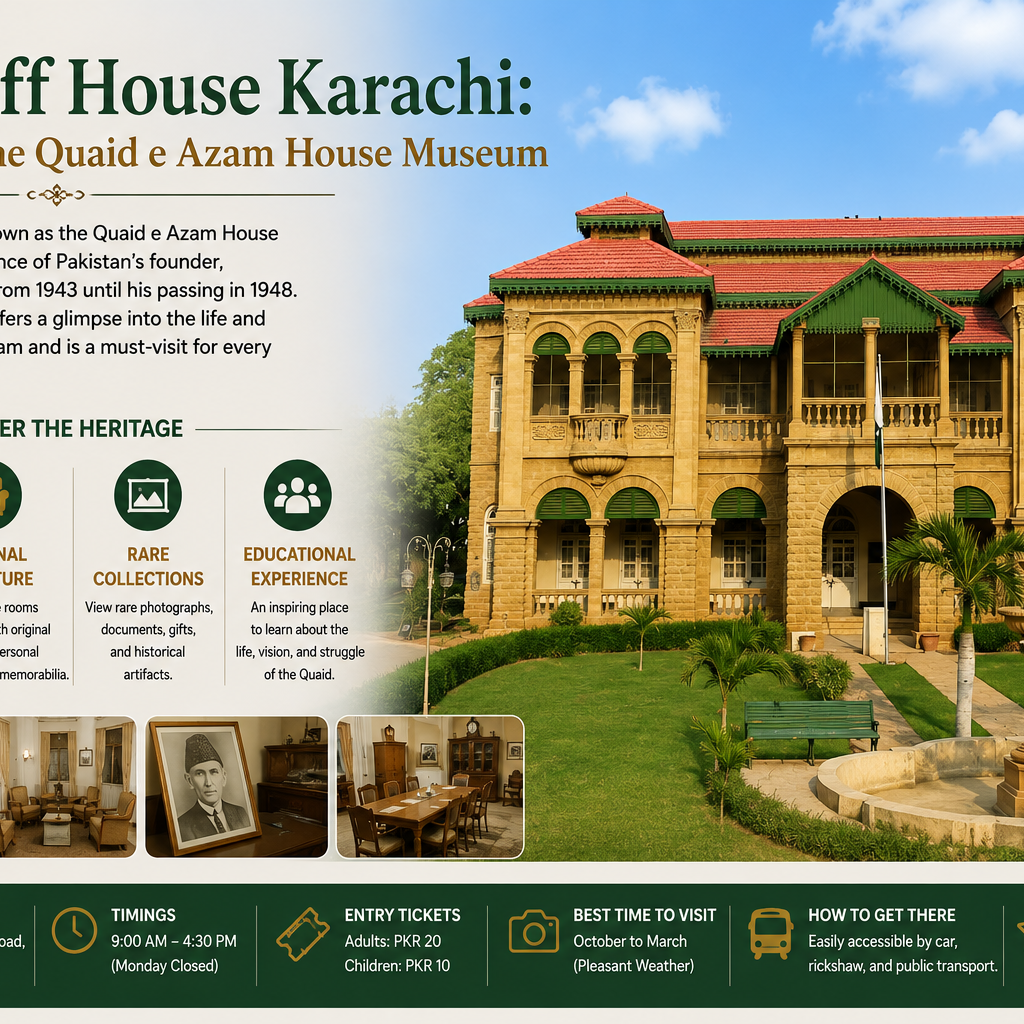
Flagstaff House which is now known as the Quaid e Azam House Museum is a historic house museum located in the Cantonment area of central Karachi. It is dedicated to the personal life of Muhammad Ali Jinnah who founded the country, located at the junction of the Shahrah e Faisal and the Fatima Jinnah Road. It is a colonial era bungalow built of yellow stone, set in open gardens. It is one of the most treasured national monuments of the city.
Flagstaff House was the home of the Quaid and his sister. Muhammad Ali Jinnah bought the house in 1943 and lived there in his final years. His sister Fatima Jinnah lived there for many years after his death in 1948. It takes its name from the flagstaff on the premises from the days when the British Army rented it for its officers. This connection to the founder gives the house its deep significance.
Flagstaff House serves today as a museum of the personal life of the Quaid. It preserves the belongings, furniture, gifts and personal effects of Muhammad Ali Jinnah and Fatima Jinnah, arranged much as they were in their day. It draws students, historians and visitors interested in the story of the founder. This role as a house museum offers an intimate glimpse of the private life of the Quaid.
Quick answer: Flagstaff House which is now the Quaid e Azam House Museum is a historic house museum located in the Cantonment area of central Karachi, near the Shahrah e Faisal. It was the residence of Muhammad Ali Jinnah who founded the country and bought it in 1943, along with his sister Fatima Jinnah in later years. It preserves their personal belongings in a graceful colonial era yellow stone bungalow.
History of Flagstaff House
The history of Flagstaff House reaches back to the colonial era. The bungalow was built in the late nineteenth century, likely around the 1890s, as a colonial residence though a tile on the roof carries the date 1868. It was designed by the architect Moses Somake, known for several landmark buildings of the city. This colonial origin shaped the graceful character of the house.
Flagstaff House took its name from its military use. The British Army rented the house from around 1940 for its senior officers, giving it the name Flagstaff House from the flagstaff on the premises. Muhammad Ali Jinnah bought the house in 1943 from a former mayor of the city, for around 115,000 rupees. This purchase turned the military bungalow into the home of the founder.
Flagstaff House became a national monument after the era of the Quaid. Muhammad Ali Jinnah lived in the house in his final years and died in 1948. His sister Fatima Jinnah lived there until 1964, using it as a base for her political life. After her time the house fell into disuse, until the Government acquired it in 1985, restored it and opened it as the Quaid e Azam House Museum in 1993. This care preserved the house for the nation.
Architecture of Flagstaff House
Flagstaff House is admired for its graceful colonial architecture. It is a double storey bungalow built of yellow stone, designed by the architect Moses Somake in the colonial style of the era. Its design features arched openings, carved pillars and semicircular balconies with a sloping roof of red clay tiles. This elegant design gives the house its distinctive presence.
Flagstaff House was built for the climate of the city. It features high ceilings, wide verandas and interconnected rooms, designed to let in light and air in the warm climate. The building holds around six spacious rooms, including bedrooms, drawing rooms, a study and a dining room. This practical, comfortable design suited it well as a family home.
Flagstaff House is set in open gardens. The house is set amid open land with a garden of old trees and green lawns, a calm and green setting in the busy city. In earlier times the sea was even visible from its upper balcony. This peaceful setting adds to the charm of the house.
Flag staff House museum today
Flagstaff House serves today as the Quaid e Azam House Museum, preserving the private world of the founder. The rooms are arranged much as they were in the days of the Quaid and Fatima Jinnah, restored to their original state. The house reflects the disciplined, uncluttered lifestyle of the founder with every item in its place. This careful preservation makes a visit deeply personal.
Flagstaff House holds a rich collection of personal belongings. It displays the furniture, books, clothing and personal effects of Muhammad Ali Jinnah from his walking cane to his glasses, along with gifts he received, such as crockery from foreign governments. A map of the country made of glass pieces, gifted by a businessman, hangs on the wall. These belongings offer a close sense of the daily life of the founder.
Flagstaff House also preserves the memory of Fatima Jinnah. The upper floor holds the rooms of Muhammad Ali Jinnah and his sister, including the modest bedroom of Fatima Jinnah with a display tied to her presidential campaign of the 1960s. A cosy breakfast nook between the rooms reflects the simplicity of their daily life. These rooms honour the founder and his sister together.
Visiting Flagstaff House
Flagstaff House is one of the most rewarding heritage sites to visit in Karachi, offering an intimate look at the life of the founder of the country. It is generally open to the public through the day, closed on certain days of the week, so it is worth checking the current timings before a visit. The entry fee is modest, often free or discounted for students though photography inside is usually restricted.
Flagstaff House is reached easily as it is located in the central Cantonment area, near the Shahrah e Faisal. It is accessible by car, taxi, rickshaw and ride hailing service, in a central and accessible part of the city. A guide at the house often shows visitors the rooms and tells the story of the founder and the house. The cooler months from around November to March offer the most comfortable time to visit. A trip combines well with the nearby central landmarks.
Places near Flagstaff House
Flagstaff House is located within reach of many landmarks and useful places in central Karachi. The Cantonment area and the Shahrah e Faisal surround it. The Saddar area with the Empress Market and the Frere Hall, is close by. The Burns Road food street lies a short distance away for traditional food.
The Mazar e Quaid, the resting place of the founder, is a short drive away in the central city. The National Museum of Pakistan and the gardens of Bagh e Jinnah are within reach. The Clifton seafront lies towards the south with the Mohatta Palace where Fatima Jinnah later lived. The Karachi Cantonment railway station is nearby.
Frequently asked questions
Where is Flagstaff House located? Flagstaff House which is the Quaid e Azam House Museum is located in the Cantonment area of central Karachi, near the junction of the Shahrah e Faisal and the Fatima Jinnah Road. It is close to the Saddar area, the Empress Market and the Burns Road food street. It is easily reached by car, taxi, rickshaw and ride hailing service.
Why is it called Flagstaff House? Flagstaff House earned its name from the flagstaff on the premises from the days when the British Army rented the bungalow for its senior officers from around 1940. After Muhammad Ali Jinnah bought the house in 1943 and it became a museum it was renamed the Quaid e Azam House though the old name endures.
When did Jinnah live at Flagstaff House? Muhammad Ali Jinnah bought Flagstaff House in 1943 and lived there in his final years until his death in 1948. His sister Fatima Jinnah then lived in the house until 1964. The founder spent much of his time at other residences, yet the house holds his personal belongings and remains closely tied to him.
What can you see at the Quaid e Azam House Museum? The museum displays the personal belongings of Muhammad Ali Jinnah from his furniture, books and clothing to his walking cane, glasses and gifts such as crockery from foreign governments. It also preserves the rooms of Fatima Jinnah. The rooms are arranged much as they were in the days of the founder.
When was Flagstaff House built? Flagstaff House was built in the colonial era, likely around the 1890s though a tile on the roof carries the date 1868. It was designed by the architect Moses Somake, known for several landmark buildings of the city. It was built as a colonial residence before the British Army rented it and Jinnah bought it in 1943.
What are the opening hours of Flagstaff House? Flagstaff House is generally open to the public through the day, closed on certain days of the week. The entry fee is modest, often free or discounted for students though photography inside is usually restricted. It is worth checking the current timings and rules before a visit, as they may vary on public holidays.
Flagstaff House is one of the most cherished heritage sites of Karachi and an intimate window into the life of the founder of the country. It was built in the colonial era and designed by the architect Moses Somake. This graceful yellow stone bungalow was the home of Muhammad Ali Jinnah in his final years and later of his sister Fatima Jinnah. It is preserved with their personal belongings and opened as the Quaid e Azam House Museum in 1993, Flagstaff House offers a close and personal glimpse of the private world of the Quaid.
Flagstaff House brings together heritage, history and the personal life of the founder in one elegant house. Its restored rooms its furniture and its personal effects from the cane of the Quaid to the modest bedroom of Fatima Jinnah, reflect the disciplined and simple lifestyle of the founder and his sister. Set in the central Cantonment area near the Shahrah e Faisal and the other landmarks of the city it is easy to reach and to combine with a wider look at the heritage of the city. It remains one of the most meaningful heritage sites in Karachi whether you visit Flagstaff House for its architecture its history or its personal connection to the founder.