Chaukhandi Tombs Karachi: History and Visitor Guide
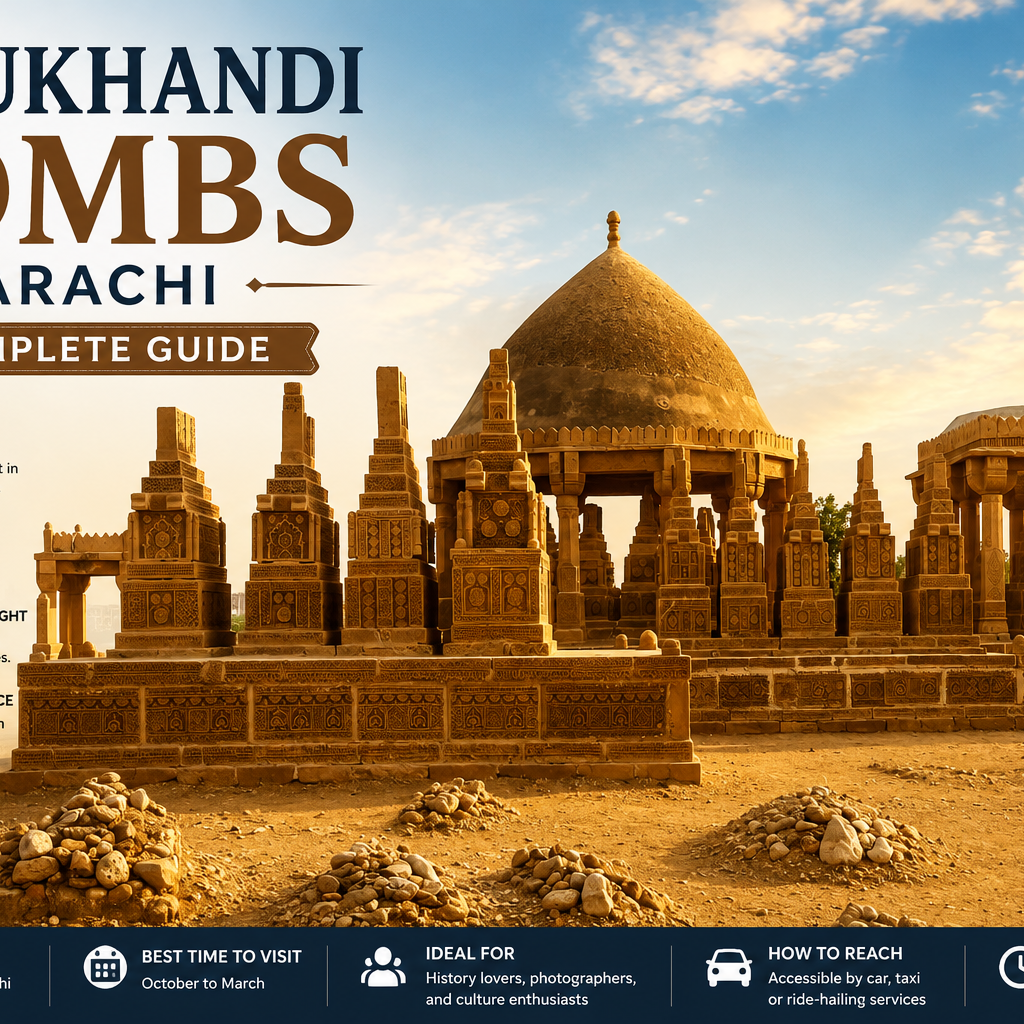
The Chaukhandi Tombs are one of the most remarkable heritage sites near Karachi. They are located near Landhi around 29 kilometres east of the city along the National Highway towards Thatta. The Chaukhandi Tombs are known for their pyramid shaped sandstone graves and their elaborate, intricate stone carvings, unique to the region of Sindh. They form an early Islamic necropolis built mainly between the fifteenth and eighteenth centuries. For anyone getting to know Karachi the Chaukhandi Tombs offer a quiet, atmospheric window into the tribal history and the craftsmanship of the region in one striking site.
This guide explains what the Chaukhandi Tombs are their history their architecture and carvings and how to visit.
Chaukhandi Tombs
The Chaukhandi Tombs form a historic Islamic necropolis located near Landhi around 29 kilometres east of Karachi along the National Highway towards Thatta. They are famous for their finely carved sandstone graves, built in a distinctive pyramid like, stepped form. The tombs spread over an area of around two square miles. They are one of the most important archaeological sites of the region. They are listed on the tentative list of World Heritage sites.
The Chaukhandi Tombs are known above all for their stone carvings. The sandstone graves are elaborately carved with geometric patterns, floral designs and symbolic motifs, in a style unique to lower Sindh. The carvings reveal an expert level of craftsmanship, closely resembling the tombs at the famous Makli necropolis near Thatta. This intricate stonework is the defining feature of the site.
The Chaukhandi Tombs are tied to the tribal history of the region. They are generally attributed to the Jokhio tribe and known as a family graveyard of the Jokhio, though other Sindhi and Baloch tribes are also buried here. The tombs reflect the culture, status and lineage of these communities. This tribal heritage gives the site its deep historical value.
Quick answer: Chaukhandi Tombs is an historic Islamic necropolis located near Landhi, about 29 kilometers east of Karachi on the National Highway going to Thatta. They were built mainly between the fifteenth and eighteenth centuries. They are known for their pyramid shaped sandstone graves and their elaborate carvings, unique to the region of Sindh. They make an atmospheric heritage day trip from the city.
History of the Chaukhandi Tombs
The history of the Chaukhandi Tombs spans several centuries. The tombs were built mainly between the fifteenth and eighteenth centuries, during the era of Mughal rule, over a period of around three hundred years. The oldest tombs are among the earliest, with the style reaching its peak in the later part of this period. This long span makes the site a rich record of the past.
The Chaukhandi Tombs are attributed mainly to the Jokhio tribe. They are known as a family graveyard of the Jokhio, though members of other Sindhi and Baloch tribes are also buried here. Many of these tribes are said to have Rajput origins, having migrated to the region during the era of the Samma dynasty. This mixed heritage is reflected in the varied style of the tombs.
The Chaukhandi Tombs have drawn attention from scholars over the years. The site was noted by colonial era administrators and archaeologists then included under the law for ancient monuments in the early twentieth century. It is now protected by the government, with a proposal to develop an archaeological park to preserve it. This protection reflects the recognised value of the site.
Architecture and carvings
The Chaukhandi Tombs are famous for their distinctive architecture. The tombs are built of yellow, buff coloured sandstone, in a stepped, pyramid like form, with a broad base that narrows towards the top through tiered levels. They are built from interlocking slabs, either as single graves or as clusters raised on a common platform. This unique form is found only in the region and cannot be seen elsewhere in the same way.
The Chaukhandi Tombs are celebrated for their intricate carvings. The sandstone surfaces are richly carved with geometric patterns, floral and foliated designs and symbolic motifs along with figures of riders, animals and birds. The graves carry some of the finest stone carving of the region, showing the skill of the craftsmen of the time. These carvings are the artistic heart of the site.
The Chaukhandi Tombs use their carvings to reflect identity and status. The graves of men often carry carvings of horsemen, swords and weapons, marking their role as warriors and protectors while the graves of women feature carved jewellery, such as necklaces, bracelets and rings. The more elaborate, multi level tombs marked the graves of leaders and the wealthy. This symbolism offers a window into the society of the time.
Location and orientation
The Chaukhandi Tombs are set in a quiet, atmospheric spot. The necropolis lies in a semi arid setting near Landhi, away from the busy city, giving it a peaceful and reflective character. The silence the age and the historical depth shape the atmosphere of the site. This quiet setting adds to the experience of a visit.
The Chaukhandi Tombs are notable for their orientation. The graves follow a distinctive north south orientation, a feature typical of this style of graveyard in the region. The tombs are organised by lineage, tribe and family, with prominent graves placed centrally. This careful arrangement offers insight into the communities buried here.
The Chaukhandi Tombs face challenges of preservation. The site has suffered from neglect, weathering and the loss of some carved stones over the years. It lacks clear boundaries in places. Calls have long been made to better protect and preserve this heritage. This care would help safeguard the site for the future.
Visiting the Chaukhandi Tombs
The Chaukhandi Tombs are a rewarding day trip near Karachi for those interested in history, heritage and craftsmanship. The experience is quiet and reflective, with few crowds. A local caretaker often provides guidance. It suits those who enjoy exploring old monuments at a relaxed pace and appreciating the fine carvings up close.
The Chaukhandi Tombs are reached easily by road as they lie near Landhi around 29 kilometres east of the city along the National Highway towards Thatta. They are accessible by car, taxi or ride hailing service, with the drive taking around 45 to 60 minutes depending on traffic. The cooler months from around November to March along with the cooler parts of the day, offer the most comfortable time to visit. A trip combines well with the nearby heritage sites towards Thatta.
Places near the Chaukhandi Tombs
The Chaukhandi Tombs are located within reach of several heritage sites and useful places east of Karachi. The Landhi and Malir areas of the city lie towards the west. The National Highway towards Thatta runs past the site.
The Makli necropolis near Thatta with its grand tombs in a related style lies a longer drive east and pairs well with a visit. The ancient Bhambore ruins also lie towards Thatta. The central city with the Mazar e Quaid and the heritage of the Saddar area is a drive back to the west. The coast of the city lies to the south.
Frequently asked questions
Where are the Chaukhandi Tombs located? The Chaukhandi Tombs are located near Landhi around 29 kilometres east of Karachi along the National Highway towards Thatta. They lie to the east of the city, past the Landhi and Malir areas. They are easily reached by car, taxi or ride hailing service, with the drive taking around 45 to 60 minutes.
How old are the Chaukhandi Tombs? The Chaukhandi Tombs were built mainly between the fifteenth and eighteenth centuries, during the era of Mughal rule, over a period of around three hundred years. The oldest tombs are more than five hundred years old, making the site an important historical and archaeological record of the region.
Who is buried at the Chaukhandi Tombs? The Chaukhandi Tombs are generally attributed to the Jokhio tribe and are known as a family graveyard of the Jokhio, though members of other Sindhi and Baloch tribes are also buried here. Many of these tribes are said to have Rajput origins, having migrated to the region during the era of the Samma dynasty.
What are the Chaukhandi Tombs known for? The Chaukhandi Tombs are known for their pyramid shaped sandstone graves and their elaborate, intricate stone carvings, unique to the region of Sindh. The carvings include geometric patterns, floral designs, riders, weapons and jewellery, marking the identity, status and gender of those buried, in a style resembling the Makli necropolis.
What do the carvings on the tombs mean? The carvings reflect the identity and status of those buried. The graves of men often carry horsemen, swords and weapons, marking their role as warriors while the graves of women feature carved jewellery such as necklaces, bracelets and rings. The more elaborate, multi level tombs marked the graves of leaders and the wealthy.
Are the Chaukhandi Tombs worth visiting? The Chaukhandi Tombs are worth a visit for those interested in history, heritage and craftsmanship. The site is quiet and reflective, with fine carvings to appreciate up close and a local caretaker who often provides guidance. It combines well with the nearby heritage sites towards Thatta, such as the Makli necropolis, for a fuller day of history.
The Chaukhandi Tombs are one of the most remarkable heritage sites near Karachi and a striking record of the tribal history of the region. This early Islamic necropolis was built mainly between the fifteenth and eighteenth centuries during the era of Mughal rule. It is attributed mainly to the Jokhio tribe along with other Sindhi and Baloch communities. Its pyramid shaped sandstone graves and its elaborate, intricate carvings make the Chaukhandi Tombs a treasure of the craftsmanship and heritage of the region.
The Chaukhandi Tombs bring together history, art and the tribal culture of the region in one atmospheric site. Their finely carved graves, with horsemen and weapons for the men and jewellery for the women, offer a window into the society, status and beliefs of the communities buried here, in a style found only in this part of the world. They are set near Landhi along the highway towards Thatta. They combine well with the Makli necropolis and the other heritage sites of the region for a day of history. They remain one of the most cherished heritage sites near Karachi and a site worthy of care and preservation whether you visit the Chaukhandi Tombs for their carvings their history or their quiet atmosphere.