Best Hospitals in Karachi: A Complete Guide
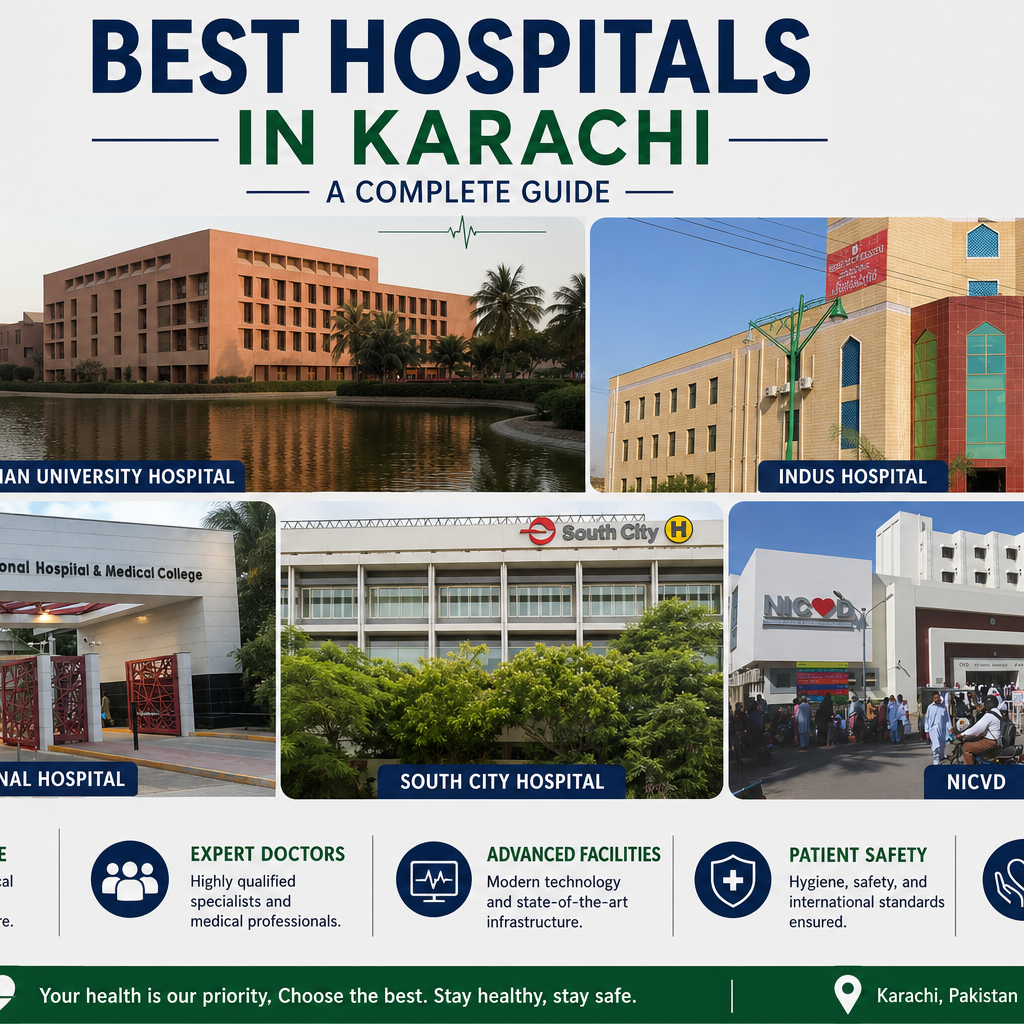
Karachi is the center of all health related activities, with some of the best hospitals found in the region being located in this city. Whether it be excellent private hospitals, charitable organizations or large teaching hospitals run by the government, one can find high quality services in any kind of specialization in this city. Some of the best hospitals in Karachi provide great services with the help of top notch doctors and facilities, as well as serve the local as well as other parts of the nation. For people in Karachi who are looking for great hospitals ths is the place for you.
This guide covers the best hospitals in Karachi from the leading private and charity hospitals to the major government and specialist institutions.
Quick answer: Karachi is the healthcare hub of the country, home to leading hospitals such as the Aga Khan University Hospital the Liaquat National Hospital and the Ziauddin Hospital. Renowned non profit hospitals include the Indus Hospital and the SIUT, both offering free care while major government hospitals include the Jinnah Postgraduate Medical Centre and the Civil Hospital. The city also holds specialist institutes for cardiac, kidney and child care. This guide is general information and not medical advice.
Healthcare hub of the country
Karachi leads the healthcare of the country. As the largest city in the country it holds the greatest concentration of hospitals from world class private institutions to major government and charity hospitals. This wealth of hospitals makes it the medical hub of the country.
The city draws patients from across the country. People travel from every region to Karachi for its advanced medical care its skilled doctors and its specialist institutions. This role as a centre of care is a large part of the identity of the city.
The city offers care for every need and budget. The hospitals of the city range from upscale private hospitals to free charity hospitals and busy government facilities so there is care to suit every need. This range is a large part of the strength of the healthcare of the city.
Leading private hospitals in Karachi
The Aga Khan University Hospital is the most prestigious. It is located on Stadium Road and is the first internationally accredited academic medical centre in the country with more than five hundred beds, skilled doctors and modern facilities across every specialty. This hospital is a leader in care, teaching and research.
The Liaquat National Hospital is a trusted name. This non profit hospital, founded around six decades ago, has grown into one of the largest tertiary care hospitals in the country with more than seven hundred beds and an associated medical college. This hospital is a pillar of care in the city.
The Ziauddin Hospital and others serve across the city. The Ziauddin Hospital group holds campuses in the North Nazimabad, Clifton and Kemari areas, offering a wide range of specialties along with other leading private hospitals such as the South City Hospital in Clifton and the Patel Hospital in North Nazimabad. These hospitals bring quality care to every part of the city.
Mon profit hospitals in Karachi
The Indus Hospital offers free, high quality care. It is located in the Korangi area and offers free of cost care to all patients, regardless of means. It was the first paperless hospital in the country. This hospital is a model of accessible, compassionate care.
The SIUT is a world renowned charity institution. The Sindh Institute of Urology and Transplantation offers free treatment in kidney care, urology, dialysis and transplantation. It is respected around the world for its work. This institution is one of the proudest achievements of the healthcare of the city.
The city holds many other charity hospitals. Along with the Indus and the SIUT the city holds a number of trust and charity hospitals that offer free or low cost care to those in need. These hospitals are a lifeline for many families. They reflect the spirit of service in the city.
Government hospitals in Karachi
The Jinnah Postgraduate Medical Centre is a major government hospital. It is located near the central city and is one of the largest government teaching hospitals in the country, offering tertiary care across every field to thousands of patients each day. This hospital is a cornerstone of public healthcare in the city.
The Civil Hospital is a historic teaching hospital. The Dr Ruth Pfau Civil Hospital, linked to the Dow University of Health Sciences, is one of the oldest and largest government hospitals in the city, serving vast numbers of patients. This hospital is a pillar of public care and medical education.
The government hospitals serve the whole city. Along with the Jinnah and the Civil the city holds a network of government hospitals and health centres that provide care to the wider population, often at little or no cost. These hospitals carry much of the healthcare load of the city. They are a vital part of the system.
Specialist institutes and care in Karachi
The city boasts of some excellent cardiac institutes. The National Institute of Cardiovascular Diseases is one of the premier institutions in the provision of heart treatment. The institution offers free heart treatment and is very renowned within the country. This institute is a leading institution in its field and has made many lives.
The city has some child and specialty hospitals. The National Institute of Child Health and various other specialty institutions are specialized in offering treatments in the fields of child health, mental disorders and cancer.
The private hospitals offer advanced specialties too. The leading private hospitals hold departments for cardiology, oncology, neurology and more along with modern diagnostic and surgical facilities. This range of specialties makes the city a centre for advanced care. It draws patients seeking expert treatment.
Emergencies and practical tips
Many hospitals offer round the clock emergency care. The major hospitals of the city, both private and government, run twenty four hour emergency departments for urgent care. This means help is available at any hour. It is wise to know the nearest hospital to your area.
The city has several ambulance services. In an emergency ambulance services such as the Edhi the Chhipa and the Aman services operate across the city, reached by their helplines. Knowing these numbers in advance is wise. They provide a vital service across the city.
A little planning helps in seeking care. It is wise to carry any medical records, to check whether a hospital accepts your insurance and to keep the details of a nearby hospital to hand. This planning makes seeking care smoother. In a medical emergency it is best to go to the nearest emergency department or call an ambulance without delay.
Frequently asked questions
What are the best hospitals in Karachi? The best hospitals in Karachi include the Aga Khan University Hospital the Liaquat National Hospital and the Ziauddin Hospital among the leading private hospitals. The Indus Hospital and the SIUT are renowned non profit hospitals offering free care while the Jinnah Postgraduate Medical Centre and the Civil Hospital are major government hospitals. The city also holds specialist institutes for cardiac, kidney and child care.
Which is the best hospital in Karachi? The Aga Khan University Hospital is widely regarded as one of the finest hospitals in the country as the first internationally accredited academic medical centre with skilled doctors and modern facilities across every specialty. The Liaquat National Hospital and the Indus Hospital are also highly respected. The best choice depends on the care needed the location and whether a private or charity hospital suits.
Which hospitals in Karachi offer free treatment? Several hospitals in Karachi offer free or low cost care. The Indus Hospital offers free of cost care to all patients while the SIUT offers free treatment in kidney care, dialysis and transplantation. The National Institute of Cardiovascular Diseases offers free cardiac care. The government hospitals, such as the Jinnah and the Civil, provide care at little or no cost.
What is SIUT? The SIUT, short for the Sindh Institute of Urology and Transplantation, is a world renowned charity institution in Karachi that offers free treatment in kidney care, urology, dialysis and transplantation. It is respected around the world for its work and its principle of free care for all. It is one of the proudest achievements of the healthcare of the city and a lifeline for many patients.
Are there 24 hour hospitals in Karachi? Yes the major hospitals of the city, both private and government, run twenty four hour emergency departments for urgent care. Hospitals such as the Aga Khan the Liaquat National the Indus and the Jinnah Postgraduate Medical Centre offer round the clock emergency services. In a medical emergency it is best to go to the nearest emergency department or call an ambulance without delay.
What ambulance services are there in Karachi? Karachi has several ambulance services that operate across the city, including the Edhi the Chhipa and the Aman ambulance services, each reached by its helpline. These services provide a vital lifeline in emergencies. It is wise to keep these numbers to hand along with the details of the nearest hospital, in case of an urgent medical need.
Caring for the city
Karachi is the healthcare hub of the country its hospitals among the finest in the region. From the world class Aga Khan University Hospital and the Liaquat National Hospital to the free care of the Indus Hospital and the SIUT and the vast government hospitals such as the Jinnah and the Civil the city offers advanced care across every field. Its skilled doctors its modern facilities and its charity institutions make the healthcare of Karachi a source of pride and a lifeline for millions.
The hospitals of Karachi serve not only the city but the whole country, drawing patients in search of expert care. Whether a world class private hospital a renowned charity institution or a busy government teaching hospital the city offers care to suit every need and budget, much of it round the clock. It is wise to know the nearest hospital and the ambulance helplines before they are needed. This guide is general information rather than medical advice so for any health concern it is best to consult a qualified doctor. In an emergency, go to the nearest hospital or call an ambulance without delay.